Garage Roofs
Roofers: Garage Roofs
Most garages have either a flat roof (felt, GRP fibreglass or EPDM rubber) or a pitched, tiled roof. Older garages — particularly sectional concrete garages built before 2000 — often have corrugated cement sheet roofs, which may contain asbestos and need careful, professional handling. A standard flat garage roof replacement typically starts from around £1,200; we'll give you an exact figure after a roof survey.
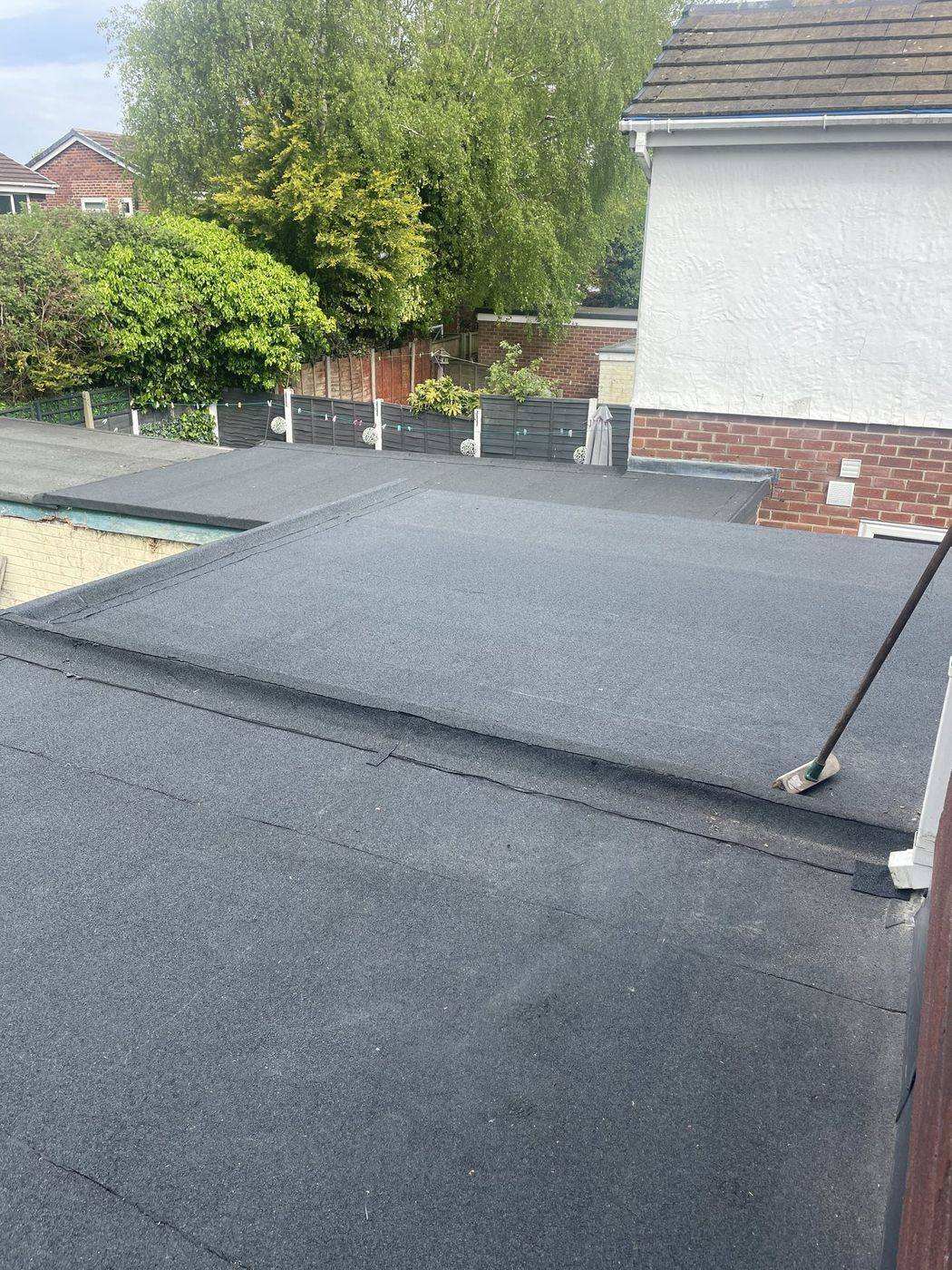
Garages get treated as an afterthought more than any other part of a house's roofline — which is a shame, because a failing garage roof causes exactly the same problems as any other: damp, rot in the structure below, and belongings ruined by water that's been getting in slowly for months before anyone notices. This guide covers every type of garage roof you're likely to have, honest cost ranges, and — because it genuinely matters for a lot of older garages — what to do if yours might contain asbestos.
The types of garage roof you might have
Which type you have depends mostly on the age and style of the garage. Here's how to tell them apart.
Flat roofs
The most common type on attached and integral garages. Covered in one of three materials: traditional bitumen felt, GRP fibreglass, or EPDM rubber. We cover the differences between these in detail in our full flat roofing guide — in short, felt is the most affordable option and still sound for a straightforward garage when correctly installed, while GRP and EPDM cost more but last 25 years or longer with minimal maintenance.
Pitched or apex roofs
More common on detached and double garages, particularly newer builds designed to match the roofline of the house. A pitched roof sheds water more effectively than a flat one and, with a sound timber structure underneath, tends to outlast flat alternatives — but it costs more to install and needs the garage structure to actually support the extra weight and roof pitch. Covered in tiles, slate, or occasionally metal sheet.
Corrugated sheet roofs
Common on older garages, particularly from the 1960s to 1980s. The sheets are typically bitumen, metal, or cement-based. Over time these crack, rust, or lift at the fixings and overlaps — and if the garage is that age, there's a real possibility the cement sheets contain asbestos, which is important enough that it gets its own section below.
Not sure what you're looking at? Send us a photo on WhatsApp and we'll give you an honest read on it — no obligation.
Garage roofs and asbestos — what you need to know
This is the section we'd rather you read properly than skim, because it's a genuine safety matter, not just another material choice.
Asbestos cement sheets were a very common, cost-effective roofing material for garages — especially sectional, prefabricated concrete garages — right up until it was banned in the UK in 1999. If your garage was built before 2000, there's a real possibility its roof contains asbestos. If it was built after 2000, asbestos is very unlikely.
The classic warning sign is a grey, corrugated cement sheet with a rough, slightly dimpled texture. Some manufacturers printed a batch code on the underside of panels — "AC" indicates asbestos cement, while "C" or "CE" indicates a non-asbestos cement fibre replacement — though many older panels have no visible marking at all. None of this adds up to a reliable DIY test. Asbestos cannot be safely or accurately identified just by looking, and we'd never suggest otherwise.
Here's our honest position: we do not handle, disturb, or remove suspected asbestos ourselves. If we find or suspect asbestos-containing material on your garage roof, we stop, tell you plainly what we've seen, and point you towards a licensed asbestos specialist for proper testing and safe removal. Once that's done and the area is confirmed clear, we come back and carry out the new roof installation. This isn't us avoiding a difficult job — it's how it's supposed to be done, and it's the same policy we apply across every job, not just garage roofs.
If your garage roof does turn out to contain asbestos, the material itself, left undisturbed and in reasonable condition, is not an immediate emergency — the risk comes from disturbing it, not simply having it. That said, it's not something to leave indefinitely either, particularly if the panels are cracked, damaged, or deteriorating.
How much does it cost to replace a garage roof?
The honest answer is that it depends on size, material, and whether asbestos removal is involved — but here are realistic UK ranges to work from, based on typical single and double garage jobs.
| Job | Typical UK range |
|---|---|
| Standard single garage flat roof (felt) | From around £1,200 |
| Single garage flat roof (GRP or EPDM) | From around £1,600 |
| Asbestos removal & disposal, single garage | Around £400 (separate from re-roofing cost) |
| Asbestos removal & disposal, double garage | Around £800 (separate from re-roofing cost) |
| Pitched/tiled garage roof | Typically £2,000–£3,500, size and material dependent |
These are indicative UK market ranges intended to help you budget, not a quote for your specific job — the only way to get an accurate figure is a proper look at the actual roof. We offer no-obligation surveys across Merseyside.
Flat or pitched — which is actually right for your garage?
If your garage is a standard single, attached or integral garage, a flat roof (GRP or EPDM for longevity, felt if budget is the priority) is usually the sensible, proportionate choice — it's what the vast majority of garages of that type already have, for good reason. A pitched roof makes more sense where the garage is detached, larger, or where matching the roofline of the house genuinely matters to the look of the property. We'll give you a straight opinion on which suits your specific garage during a survey, not just sell you whichever is more expensive.
✓ Signs your garage roof needs attention
- Damp patches or staining on the garage ceiling
- Sagging or visibly uneven roof line
- Cracked, lifted, or missing sheet/felt sections
- Daylight visible through the roof structure
- Moss or standing water pooling on a flat roof
⚠ If you suspect asbestos
- Do not drill, cut, jet-wash, or disturb the material
- Do not attempt removal yourself
- Get a professional test before any work proceeds
- Undisturbed, intact material is not an immediate emergency
- Call us — we'll advise honestly and point you the right way
Not sure what your garage roof needs?
We offer roof surveys across Merseyside. We go up, take photos, show you what we find and give you an honest recommendation — including telling you plainly if asbestos looks likely. No pressure, no obligation.
Frequently Asked Questions
Related guides
Guide
Garage Roofs Explained
Materials, asbestos & Building Regs by size →
Guide
Garage Roofs Near You
Find your local garage roof page →
Guide
Flat Roofs in Merseyside
Felt vs GRP vs EPDM, compared in full →
Guide
Loft & Attic Cleaning
Our asbestos policy explained in full →
Guide
Emergency Roof Repairs
Storm damage and active leaks →