Pitched Roofs
Roof Ventilation: Why It Matters
Roof ventilation lets moisture-laden air escape the roof space rather than condensing on cold surfaces, preventing timber decay, mould, and reduced insulation performance. Blocked eaves vents and loft conversions that disrupt airflow are the most common causes of inadequate ventilation.
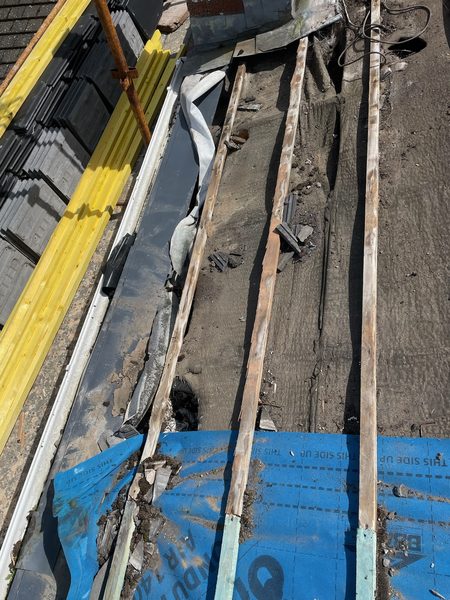
Roof ventilation rarely gets a homeowner’s attention until something’s already gone wrong — a damp loft, blackened timber, or mould where insulation meets the roof structure. It’s one of those things that’s invisible when done properly and expensive to ignore.
What roof ventilation actually does
Every occupied building generates moisture. Ventilation allows moisture-laden air to escape the roof space rather than condensing on cold surfaces — particularly the underside of the roofing felt and the roof timbers themselves.
What happens when ventilation is inadequate
Condensation forms on the underside of the roof — often the first sign, visible as damp patches in the loft, particularly in colder months.
Timber decay. Sustained dampness gradually degrades roof timbers — a slow process, often unnoticed until the timber has genuinely weakened.
Mould growth and reduced insulation performance, since damp insulation performs significantly worse than dry insulation.
Shortened roof lifespan overall — see our guide on how long does a roof last.
Common causes of inadequate ventilation
- Blocked eaves vents — over-insulating a loft is a common, well-intentioned mistake
- No ridge ventilation on older properties never originally built with it
- Loft conversions that disrupt the original airflow pathway
- Vapour barrier problems in more modern insulation installations
Signs of a ventilation problem
- Visible condensation on the underside of loft roofing felt
- Mould on timber or insulation in the loft space
- A musty smell in the loft
- Insulation that feels damp to the touch
How it’s fixed
Solutions depend on the specific roof construction, but typically involve clearing blocked eaves vents, adding ridge ventilation, or installing additional vent tiles — usually straightforward to build in as part of a re-roofing project.
If you’re planning a re-roof or loft conversion, we assess ventilation properly and build in a fix as part of the wider job.
Not sure what your roof needs?
We offer free surveys across Merseyside. We go up, take photos, show you what we find and give you an honest recommendation. No pressure, no obligation.