Flat Roofs
Warm Roof vs Cold Roof: What’s the Difference?
A warm roof has insulation above the structural deck, keeping it condensation-free; a cold roof has insulation below the deck, leaving it prone to trapped condensation unless carefully ventilated. Current Building Regulations increasingly favour warm roof construction for flat roof replacements.
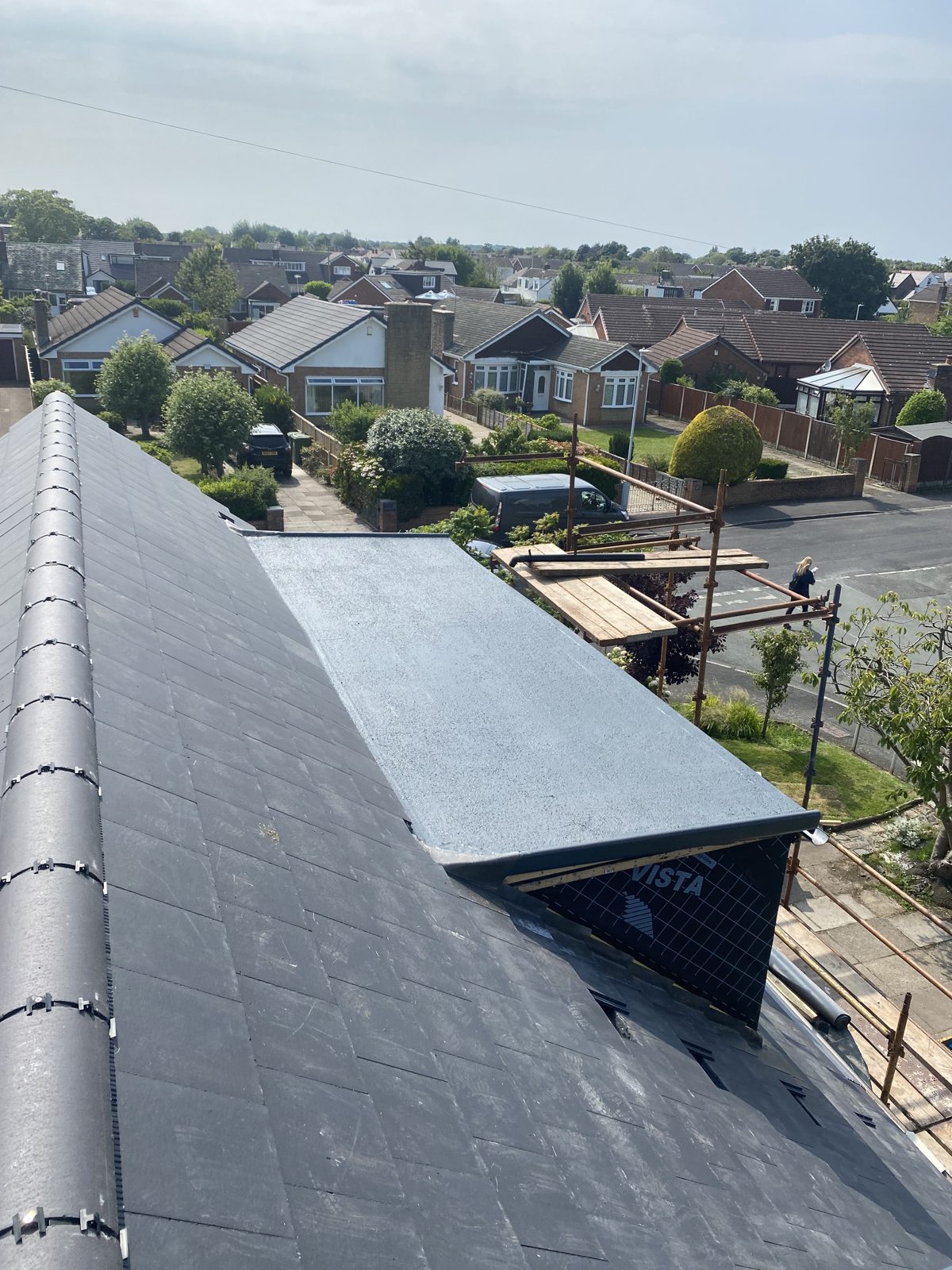
If you’ve been quoted for flat roof work and heard the term “warm roof upgrade,” it might not be obvious what it actually means or why it’s relevant to your job. It’s one of the most important — and most commonly under-explained — decisions in flat roof construction, so here’s a clear breakdown.
What the terms actually mean
This is about where the insulation sits relative to the structural deck — not about the covering material sitting on top.
Cold roof construction: insulation sits between the roof joists, below the deck and the waterproof covering. This was the standard approach for decades, but it has an inherent problem — warm, moist air from inside the building can reach the underside of the cold deck above the insulation and condense there.
Warm roof construction: insulation sits above the structural deck, directly beneath the waterproof covering. This keeps the deck itself warm, on the same “side” as the heated building below, which largely eliminates the condensation risk.
Why this matters in practice
Condensation risk. Cold roof construction is significantly more prone to trapped condensation forming within the roof structure — moisture that can’t escape, leading to timber decay, mould, and reduced insulation performance over time. See our guide on flat roof condensation and damp for the full picture.
Building Regulations. Current regulations increasingly favour warm roof construction for new work and full replacements. If you’re having a flat roof fully replaced, a warm roof upgrade is often what’s required to meet current standards — not an optional extra. This ties directly into Building Control sign-off.
Long-term performance. A well-installed warm roof generally performs more reliably over its lifespan, with less risk of hidden structural problems developing unnoticed.
Is a warm roof always more expensive?
Slightly, yes — there’s more insulation material and sometimes additional detailing at upstands and edges. But when you’re already replacing a flat roof covering, the incremental cost of doing it as a warm roof is usually modest relative to the total job cost.
Dormer roofs specifically
If your flat roof sits above a dormer window, the same principles apply, but dormers have some specific considerations around limited depth for insulation. See our dedicated guide on dormer roof warm roof upgrades for the specifics.
We build warm roof construction into flat roof replacements as standard where it’s appropriate, and we’ll explain clearly why.
Not sure what your roof needs?
We offer free surveys across Merseyside. We go up, take photos, show you what we find and give you an honest recommendation. No pressure, no obligation.