Roof Leaks
Chimney Flashing Problems: The #1 Cause of Roof Leaks
Chimney flashing — the lead detailing sealing the junction between a chimney and the roof — is one of the most common sources of pitched roof leaks, typically failing due to age, mortar joint deterioration, or poor original installation. Proper repair involves re-dressing new lead into cleared mortar joints, not just patching with sealant.
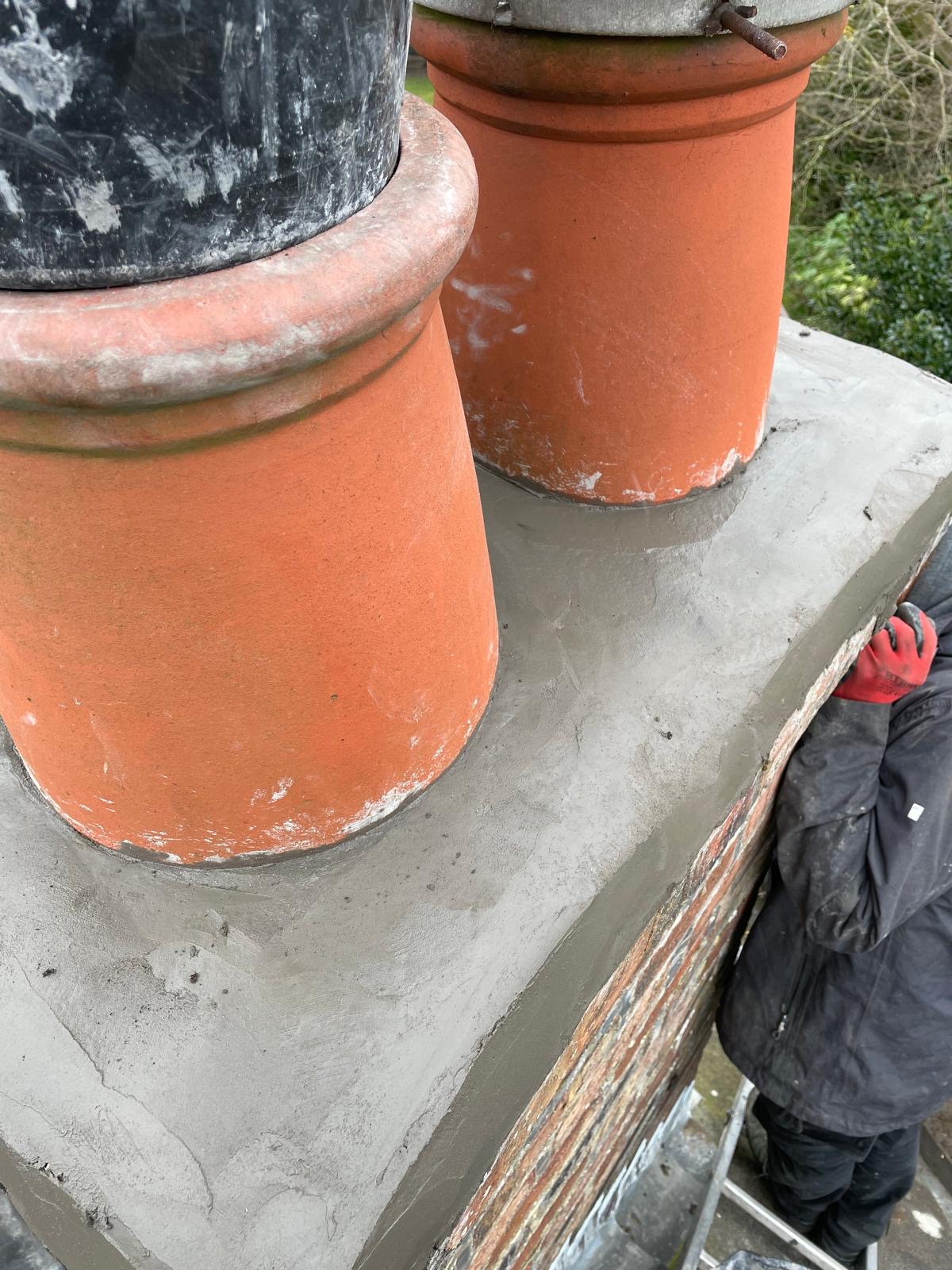
If you asked us to name the single most common source of pitched roof leaks we’re called out to investigate, chimney flashing would be at or near the top of the list. It’s a small detail relative to the whole roof, but it does a disproportionate amount of the work keeping water out at one of the most vulnerable junctions on the entire structure.
What chimney flashing actually is
Flashing is the weatherproof detailing — traditionally lead — that seals the junction where a chimney stack passes through the roof covering. It typically comes in two parts: stepped flashing running up the sides of the chimney, dressed into the mortar joints, and a back gutter at the top side of the chimney, handling the higher water volume running down from above.
Why it fails
Age and material fatigue. Lead is durable but not indestructible — thermal expansion and contraction over decades can cause it to crack, particularly at bends and joints.
Mortar joint deterioration. Flashing is dressed into the mortar joints of the chimney brickwork. As that mortar deteriorates, the flashing can work loose from its anchoring point, even if the lead itself is still sound.
Poor original installation. A detail where installation quality matters enormously relative to the amount of material involved.
Thermal movement and physical damage from falling debris or storms.
Signs of flashing failure
- Damp staining on the chimney breast inside the property
- Visible gaps, cracks, or lifted sections in the flashing
- Green staining or white powdery deposits on brickwork below the flashing line
- Mortar crumbling or missing around the base of the chimney
Why this gets missed so often
Flashing sits at the base of the chimney, often not clearly visible from ground level, and a roof can look entirely normal from a casual glance while flashing has already failed. See our related guide on why your roof might be leaking even though it looks fine.
How proper repair works
Effective flashing repair isn’t just patching a visible gap — it involves removing the damaged section, re-dressing new lead properly into cleared mortar joints, and ensuring both the stepped flashing and back gutter are correctly detailed. A rushed fix — sealant slapped over a gap — tends to fail again within months.
If you’re seeing signs of flashing failure, or have an unexplained leak near a chimney, we assess and repair it properly — not just patch over the symptom.
Not sure what your roof needs?
We offer free surveys across Merseyside. We go up, take photos, show you what we find and give you an honest recommendation. No pressure, no obligation.