Garage Roofs
Garage Roofs Explained
Garage roofs get treated as an afterthought, but they raise two questions most house roofs don't: whether the roof might contain asbestos, and whether Building Regulations even apply given how small most garages are. We fit GRP, EPDM and felt honestly specified to your garage and budget, never touch suspected asbestos ourselves, and confirm the Building Regs position for your specific garage before quoting — not after.
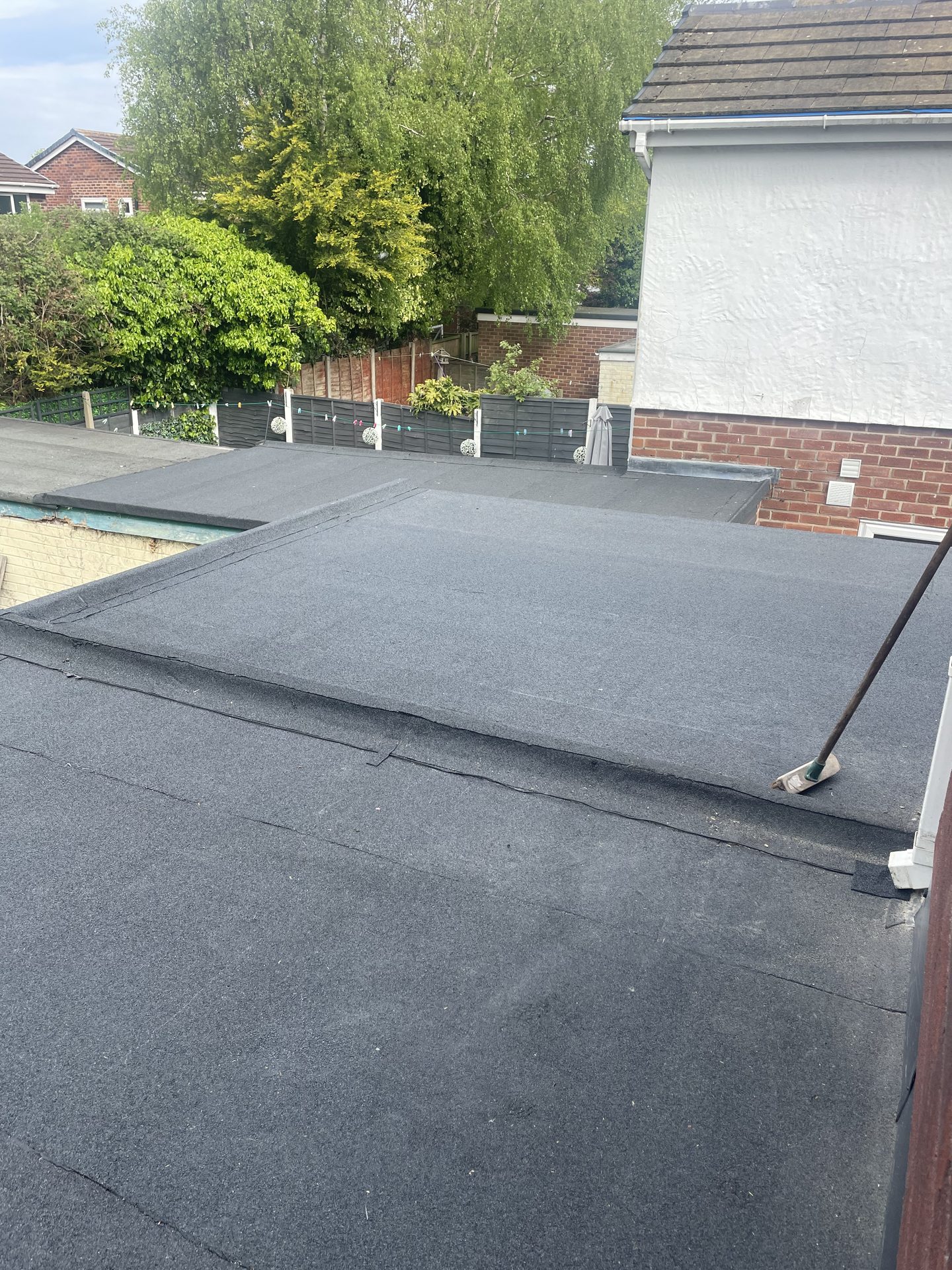
A completed garage roof — material, safety and Building Regs all matter here.
Garage roofs are small enough to feel like a minor job, which is exactly why the two things that actually matter — asbestos risk on older garages, and whether the roof needs Building Regulations sign-off at all — get skipped over. This guide covers materials, the asbestos question properly, and the size thresholds that determine what compliance actually applies to your garage.
On this page
GRP, EPDM & Felt Compared
Most garage roofs are flat or low-pitch, so the same three materials that cover house flat roofs apply here too — see our complete flat roofing guide for the full comparison. The short version for garages specifically:
| GRP / EPDM | Felt | |
|---|---|---|
| Typical lifespan | 25–30 years | ~15 years |
| Upfront cost | Higher | Lower |
| Best for | Long-term ownership | Tighter budget, shorter-term plans |
GRP and EPDM both significantly outlast felt and are the better long-term choice for most garage roofs. Felt still has a genuine place on a tighter budget or where you don't plan to be in the property for decades — we'll specify honestly rather than push the more expensive option regardless of your situation.
Asbestos — What You Need to Know
This is a genuine safety matter, not just a material choice — worth reading properly rather than skimming.
Asbestos cement sheets were a very common, cost-effective roofing material for garages — especially sectional, prefabricated concrete garages — right up until it was banned in the UK in 1999. If your garage was built before 2000, there's a real possibility its roof contains asbestos. Built after 2000, it's very unlikely.
The classic warning sign is a grey, corrugated cement sheet with a rough, slightly dimpled texture, sometimes with a printed batch code — "AC" indicates asbestos cement, "C" or "CE" indicates a non-asbestos replacement — though many older panels have no visible marking at all. None of this is a reliable DIY test. Asbestos cannot be safely or accurately identified just by looking.
Our position: we do not handle, disturb or remove suspected asbestos ourselves. If we find or suspect asbestos-containing material on your garage roof, we stop, tell you plainly what we've seen, and point you towards a licensed asbestos specialist for proper testing and safe removal. Once that's done and confirmed clear, we come back and carry out the new roof installation. See our full garage roofs guide for more detail on this.
Building Regs & Planning Permission by Size
Most garage roof replacements need neither planning permission nor formal Building Regulations sign-off, but the exemption depends on real size and construction thresholds, not just "it's a garage."
Usually exempt
- Detached, under 15m² — wholly exempt
- Detached, 15-30m², at least 1m from a boundary
- Detached, 15-30m², non-combustible construction
- Like-for-like replacement, no height change — usually permitted development
Regulations likely apply
- Over 30m², regardless of construction
- Attached garages — always need Building Regs
- Conservation areas or listed-building attachments
- Any increase in height or footprint
Electrical work in a garage always needs to comply with Part P regardless of the garage's exemption status for the structure itself. We'll confirm the position for your specific garage as part of the survey, not assume.
Our Process
- Survey and assess — including checking for signs of asbestos before anything else is agreed.
- Confirm the Building Regs position — based on your garage's actual size, construction and boundary distance.
- Specify the material honestly — GRP, EPDM or felt, matched to your budget and how long you plan to stay.
- Install to specification — with correct falls and edge details for a genuinely watertight result.
- Written guarantee — every garage roof backed the same as any other job we do.
Garage Roofs, Area by Area
We install and repair garage roofs across the whole of Merseyside and West Lancashire, with the same honest, safety-first approach described on this page.
All Merseyside
Main garage roofs page
Formby
Garage roofs
Southport
Garage roofs
Crosby
Garage roofs
Hightown
Garage roofs
Liverpool
Garage roofs
Ormskirk
Garage roofs
Maghull
Garage roofs
Ainsdale
Garage roofs
Birkdale
Garage roofs
Bootle
Garage roofs
Waterloo
Garage roofs
Aintree
Garage roofs
Blundellsands
Garage roofs
Aughton
Garage roofs
Lydiate
Garage roofs
Kirkby
Garage roofs
Litherland
Garage roofs
Churchtown
Garage roofs
Banks
Garage roofs
Burscough
Garage roofs
Crossens
Garage roofs
Marshside
Garage roofs
Thornton
Garage roofs
Frequently Asked Questions
Summary
A garage roof looks like a small, simple job, and often it is — but the two things worth getting right are recognising a potential asbestos roof rather than guessing, and understanding that most garage roof replacements don't need Building Regs or planning permission at all given typical UK garage sizes. Get an honest material recommendation, a straight answer on compliance, and you're set.
Garage roof needing attention?
Honest material specification, asbestos-safe practice, clear Building Regs guidance — anywhere across Merseyside.
Related guides
Full Garage Roofs Guide
Cost, materials & asbestos in depth
Flat Roofing Explained
The full materials picture
GRP vs EPDM vs Felt
Detailed materials comparison
New Roofs Explained
Building Regs for the main house
Independent Building Control
How sign-off works
Roofer Red Flags
What else to watch for in a quote