★★★★★
“They came out the same day, found the problem straight away and had it fixed before the rain came back. Honest price and very tidy. Highly recommended.”
Formby
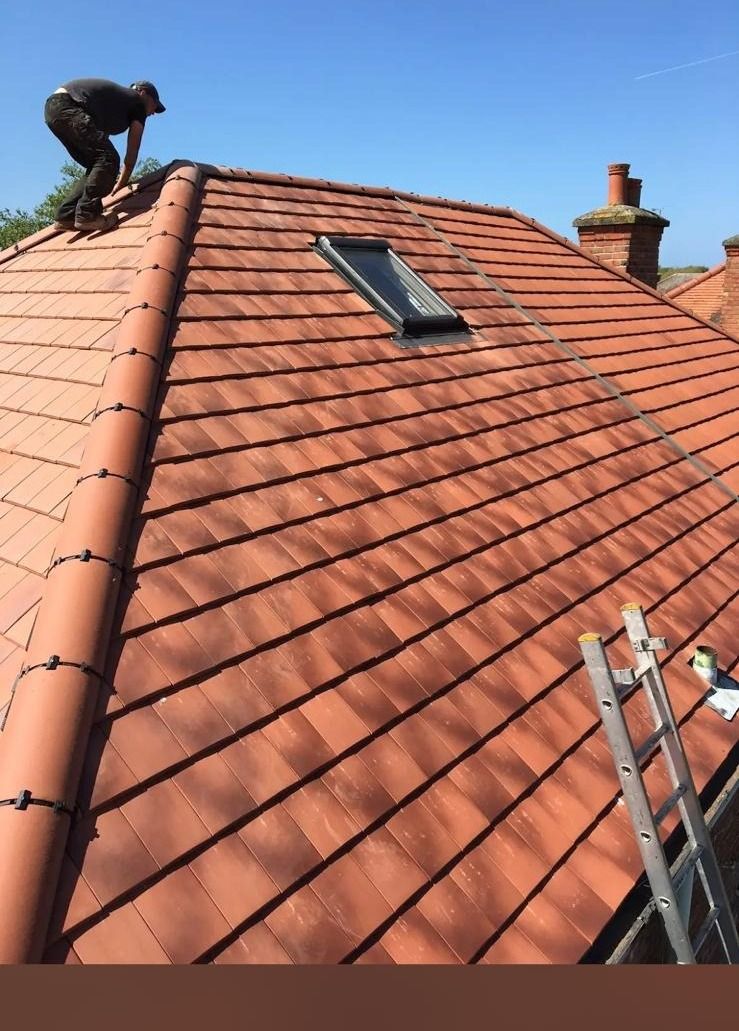
★ Fully insured on every job
Roofing done properly, every single time
Family-run for 30 years, straight-talking roofers based in Formby, working across Merseyside's toughest coastal weather. Roof surveys, honest prices, a written guarantee on every job.
Is your roof ready for winter? Get your chimney checked before the winter in Greasby. Contact Select Roofing to discuss repairs, maintenance and a free, no-obligation quotation.
Cracked flaunching, loose pots, crumbling ridge bedding and lifted lead — found and repaired properly. Free quotes across CH49. Call 07596 884288.
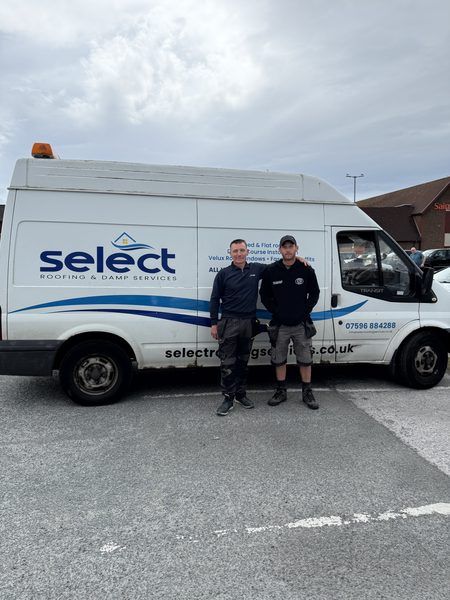
⚡ Contact us for our next available appointment in Greasby
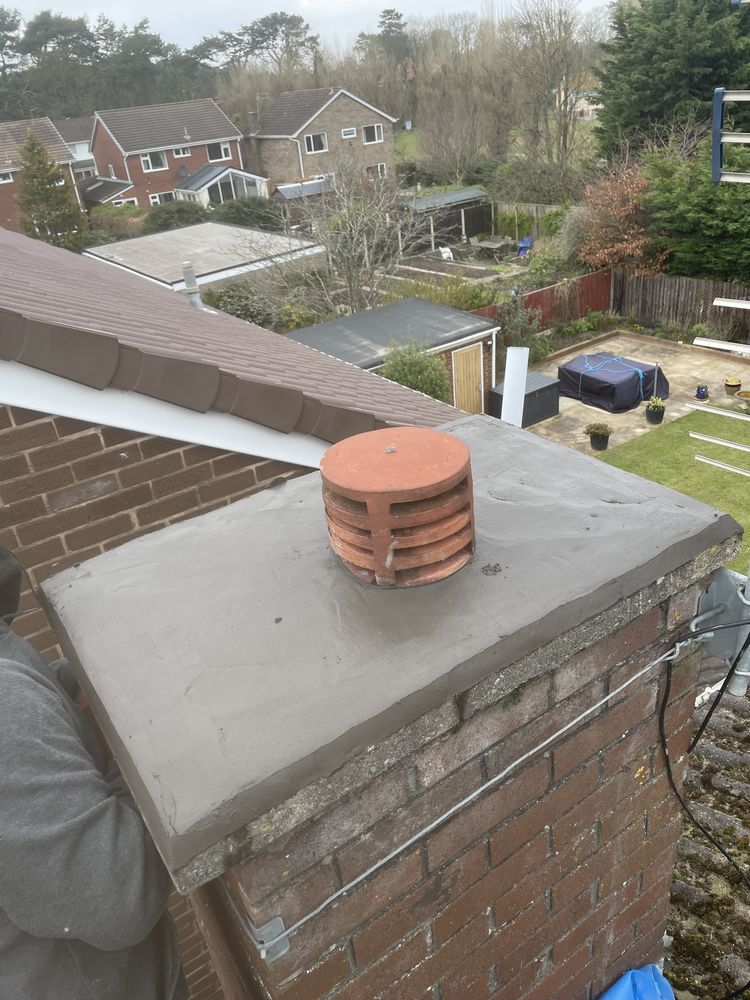
Chimney Repairs — Greasby, CH49
Greasby sits in the middle of the peninsula, sharing postcode district CH49 with Upton, Woodchurch, Landican and Saughall Massie. Wirral Council names Greasby among the places shaped by post-war suburban growth, alongside Leasowe, Moreton, Pensby, Woodchurch and Eastham. The housing is predominantly post-war semi-detached and detached around an older village core, which on a roof means tile, with mortar-bedded ridges and hips.
Mortar-bedded is the operative word. The ridge and hip tiles on this kind of roof are held on with mortar rather than mechanically fixed, and so are the pots at the top of the stack, bedded into a sloped fillet called the flaunching. All of that mortar went on at the same time in the same mix, which is why it tends to reach the end of its life all at once rather than one element at a time.
What that looks like from the ground is a pot that has started to lean, or a ridge tile sitting slightly proud of its neighbours. What it looks like inside is a damp patch on the chimney breast or a stain appearing on a bedroom ceiling near the ridge. Both are cheap problems while they are still roof problems, and because the access to the roof is the expensive part of either job, doing both on one visit is the obvious economy.
No conservation area named Greasby appears on Wirral Council’s list of 26 designated areas, so for most homes here a like-for-like re-roof is usually permitted development, with building regulations still applying to the work. Saughall Massie and Frankby Village, both nearby, are designated, and boundaries do not always follow the lines people expect, so if you are near one it is worth confirming — because in a Wirral conservation area, planning permission is needed to change exterior materials, and the council lists tiles among them. Permission is also needed for roof alterations that raise the ridge height or extend more than 15cm beyond the plane of the roof, and to alter or replace a flue or chimney on a front or side elevation.
📞 Call for a free quoteSame mortar, same week, same age. The roof access is the expensive part of either job, so doing both at once is the saving.
Pots move before ceilings stain. A photograph from the ground often tells us how urgent it is before we arrive.
Saughall Massie and Frankby Village nearby are designated, and the lines do not run where people assume.
Every chimney repair carries our written guarantee and the photographs.
New flaunching formed and the pots rebedded on a tiled suburban roof.
A roof survey is the cheaper way to find out where you stand: our £249 roof survey report in Greasby records the stack, the flaunching, the pots and the flashings with photographs. For the detail behind the work on this page, see repointing and rebuilding, chimney flashing problems and chimney repairs explained.
Common questions
It means the ridge and hip tiles are held on with mortar rather than mechanically fixed, which is how most post-war roofs around here were built. The same mortar beds the pots at the top of the stack. It has a working life, and because it all went on at the same time in the same mix, it tends to reach the end of that life all at once rather than one element at a time.
No conservation area named Greasby appears on Wirral Council’s list of 26 designated areas, so for most homes here a like-for-like re-roof is usually permitted development, with building regulations still applying to the work itself. Saughall Massie and Frankby Village nearby are designated, and in a designated area in a Wirral conservation area, planning permission is needed to change exterior materials, and the council lists tiles among them. Permission is also needed for roof alterations that raise the ridge height or extend more than 15cm beyond the plane of the roof, and to alter or replace a flue or chimney on a front or side elevation. We are not planning consultants and we do not give planning advice. What we do is tell you the condition of your roof and what putting it right would involve, so you can take the right question to Wirral Council.
On a roof of this age, usually yes. The flaunching at the stack head and the mortar bedding the ridges and hips are the same material of the same age, so when one is failing the others generally are. The access is the costly part of either job. We quote them separately so you can see the split and decide yourself, and we will say plainly if we think one can wait.
If it is leaning over a drive, a footpath or anywhere people walk, call 07596 884288 and we will treat it as urgent. Otherwise usually within a few days for a quote. Send a photograph on WhatsApp if you can — a picture from the ground often tells us how far the flaunching has gone before we arrive.
Yes, and it is the most common cowl we fit. The mesh has to suit the fuel — coarser for solid fuel and multi-fuel, finer for gas — and some stove manufacturers advise against a mesh terminal on their appliance, so we check the appliance instructions before fitting one to a working flue. If the stack is being repaired anyway, fitting a guard at the same time costs very little next to the access.
Not while the nest is in use. Under section 1 of the Wildlife and Countryside Act 1981 it is an offence to intentionally take, damage or destroy the nest of any wild bird while that nest is in use or being built, and being a nuisance is not an exception. We will inspect, tell you whether it is active, and clear the flue and fit a guard once it is no longer in use, which is usually from late summer. Do not light the fire in the meantime and do not try to smoke them out.
Cowls and bird guards — Greasby
Post-war Greasby houses were built with fireplaces that most of them no longer use, and the pots are still sitting open on top. Rain going down an open pot into a stack whose flaunching is already failing is the quickest route to damp on a chimney breast. A ventilated cap closes it to rain and wildlife while keeping the air movement a disused flue needs, which is what prevents the staining rather than the rain alone.
The mesh has to match the fuel. Solid fuel and multi-fuel guards need a coarser mesh, around an inch square, because those flues run hotter and carry more soot and debris than a fine mesh can pass. Gas appliances take a much finer mesh. Fitting the wrong one is not merely inefficient: a clogged or over-restrictive guard on a live flue can push smoke and combustion gases back into the house. Some stove manufacturers also advise against a mesh terminal on their appliance at all, so we check the appliance instructions before a guard goes on a working flue.
More detail: our chimney pots, cowls and wildlife guide covers the types and the mesh sizes, and we also do cowl fitting, pot replacement and capping for unused stacks.
📞 Ask about a cowl for your stackA mesh cage over the pot. The most common type we fit: it keeps birds and wildlife out of the flue while still letting it draw and ventilate. If a stack is being worked on for any other reason, fitting one at the same time costs very little next to the access.
Usually H-shaped, using the airflow itself to steady the draw. Worth it if an open fire or log burner pushes smoke back into the room on windy days. If the problem persists after one is correctly fitted, the cowl is rarely the fault — the flue is more often undersized, partly blocked, or running too cold to draw.
Cut water entering a flue that is no longer used, without sealing it. A disused flue still needs some air movement: close it completely and the damp shows up on the chimney breast instead. A ventilated cap is the right answer, not a solid one.
Use the wind to pull the draw upward rather than merely resisting downdraught. Worth considering on genuinely exposed sites where a fixed cowl has not been enough. They should turn freely, so they are worth a look at the same time as a sweep.
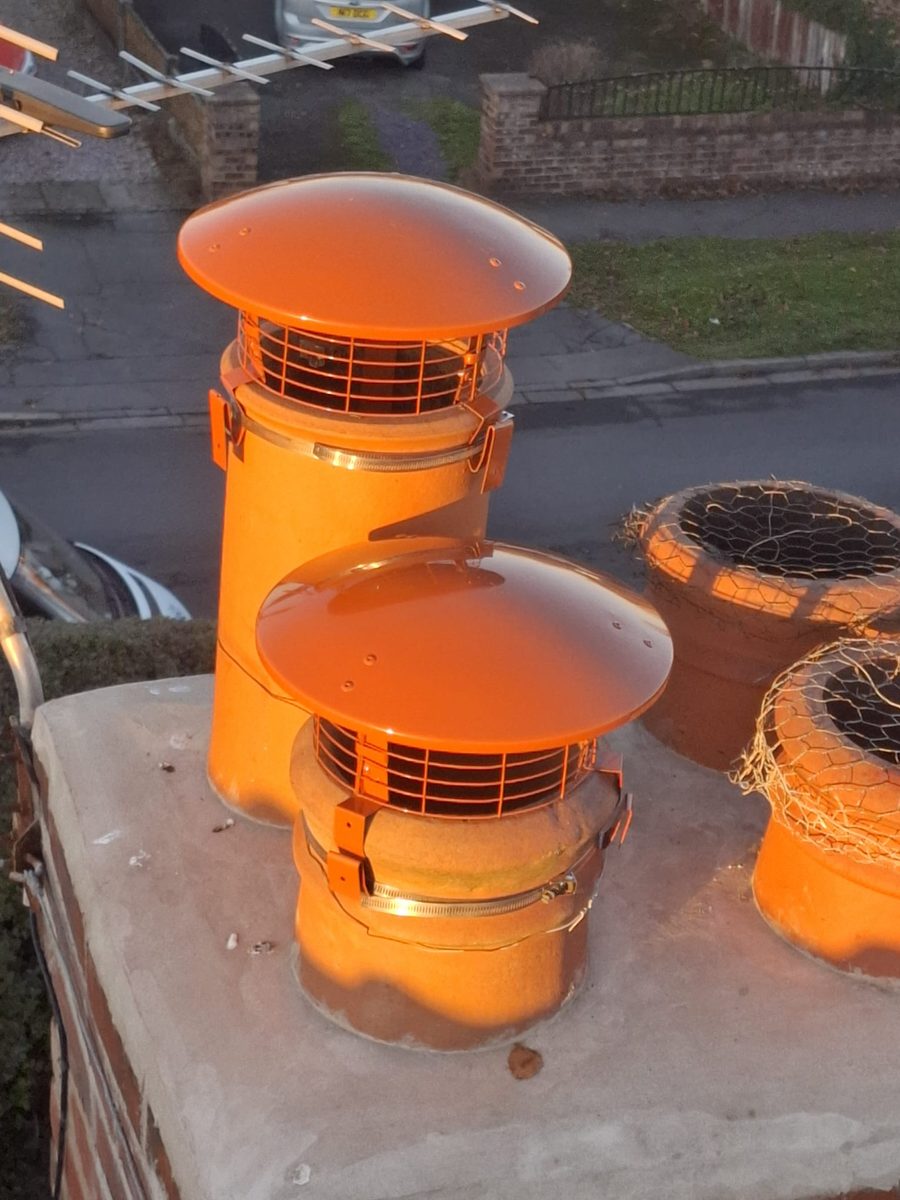
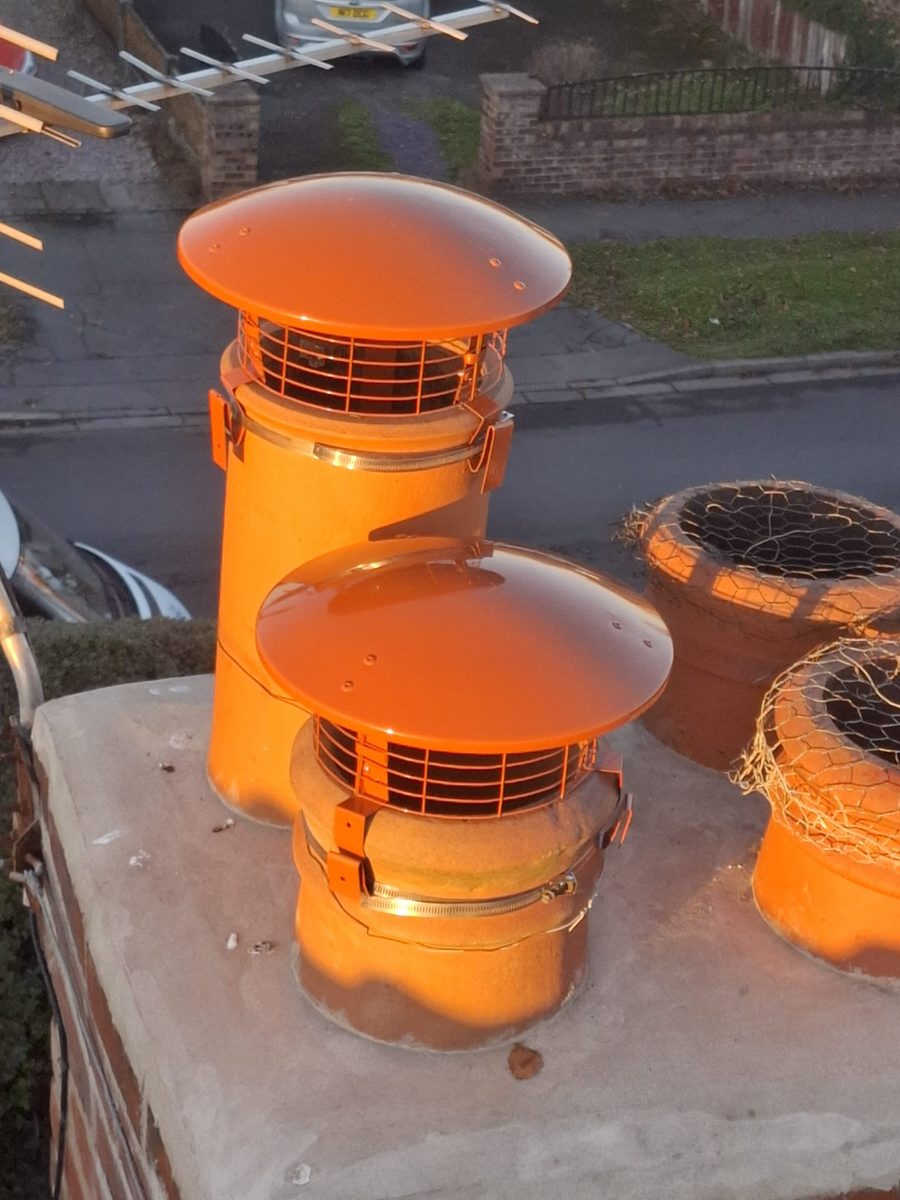
Bird guard cowls bedded into new flaunching — the guard and the flaunching done as one job.
Birds, nests and the law — Greasby
Jackdaws will take an open pot on a post-war semi as readily as on a period terrace, and once one stack on a street is occupied others nearby usually follow. The nest blocks the flue — a fire and carbon monoxide risk wherever an appliance is still connected and a source of damp where none is. With no conservation area designation in Greasby, fitting a guard afterwards is normally straightforward.
The law is specific, and it is the reason this cannot simply be cleared on the day. Under section 1 of the Wildlife and Countryside Act 1981 it is an offence to intentionally take, damage or destroy the nest of any wild bird “while that nest is in use or being built”. Being a nuisance is not a reason the law recognises: the RSPB’s position is that birds cannot legally be removed for being a nuisance or an inconvenience.
A nest in a live flue is a fire risk and a carbon monoxide risk, because it blocks the route the combustion gases are meant to take. On a flue that is no longer used it still holds moisture against the inside of the stack, which comes through as staining on the chimney breast. Smoking birds out is the worst option of all — a flue full of dry nesting material is exactly the wrong thing to set alight.
Birds generally start nesting in a dark, enclosed space from March or April, depending on the weather, and a jackdaw can build quickly once it starts. Where a nest is active, the clearance and the guard wait until the young have fledged and the nest is no longer in use — usually from late summer. We will tell you that plainly rather than take the job on and do it anyway.
We inspect first and establish whether the nest is in use. Once it is not, we clear the flue, make good the flaunching if the pots have been disturbed, and fit a bird guard cowl so it does not happen again. Clearing without fitting the guard simply books the same job for next spring.
Bats roost in roofs far more often than in flues, but all UK bat species are protected and it is an offence to damage or destroy a roost whether or not bats are present at the time. If a stack repair means opening up the roof around it, that is worth knowing first — see our bats and re-roofing guide.
If you think birds are nesting in your chimney now, do not try to clear it yourself and do not light the fire. Call us and we will look at it, tell you whether the nest is active, and book the clearance and the guard for when the work is lawful.
Also in Greasby
Greasby
Types, process & warning signs
The #1 cause of leaks
Guards, caps and the law
Mortar work on stacks
When a stack has to come down
Across Merseyside
Across Merseyside
Nearby areas
Sefton and the coast
West Lancashire
Liverpool
Wirral
Knowsley and St Helens
Chimney repairs
Chimney repairs
Chimney repairs
Chimney repairs
Chimney repairs
Chimney repairs
Chimney repairs
Chimney repairs
Chimney repairs
Chimney repairs
Chimney repairs
Chimney repairs
Chimney repairs
Chimney repairs
Chimney repairs
Chimney repairs
Chimney repairs
Chimney repairs
Chimney repairs
Chimney repairs
Chimney repairs
Chimney repairs
Chimney repairs
Chimney repairs
Chimney repairs
Chimney repairs
Chimney repairs
Chimney repairs
Chimney repairs
Chimney repairs
Chimney repairs
Chimney repairs
Chimney repairs
Chimney repairs
Chimney repairs
Chimney repairs
Chimney repairs
Chimney repairs
Chimney repairs
Chimney repairs
Chimney repairs
Chimney repairs
Chimney repairs
Chimney repairs
Chimney repairs
Chimney repairs
Chimney repairs
Chimney repairs
Chimney repairs
Chimney repairs
Chimney repairs
Chimney repairs
Chimney repairs
Chimney repairs
Chimney repairs
Chimney repairs
Chimney repairs
Chimney repairs
Chimney repairs
Chimney repairs
Chimney repairs
Chimney repairs
Chimney repairs
Chimney repairs
Chimney repairs
Chimney repairs
Chimney repairs
Chimney repairs
Chimney repairs
Chimney repairs
Chimney repairs
Chimney repairs
Chimney repairs
Chimney repairs
Chimney repairs
Chimney repairs
Chimney repairs
Chimney repairs
What customers say
“They came out the same day, found the problem straight away and had it fixed before the rain came back. Honest price and very tidy. Highly recommended.”
Formby
“Used Select Roofing for a full roof replacement — new concrete tiles throughout. From the initial survey to the final clean-up, they were professional throughout. A credit to the trade.”
Southport
“Called on a Saturday after a storm. They were with us within two hours, made everything safe and came back Monday to complete the repair. Couldn't ask for more.”
Crosby
Contact us today for a free, no-obligation quote. We aim to respond to all enquiries within the hour during working hours.
Get in touch
No obligation, no pressure — just an honest quote from the people who'll actually carry out the work. Fill in the form below or message us directly on WhatsApp, whichever's easier.
Prefer to message us directly?
💬 WhatsApp Us NowTell us what’s happening and we’ll come back to you with a free, no-obligation quote.