★★★★★
“They came out the same day, found the problem straight away and had it fixed before the rain came back. Honest price and very tidy. Highly recommended.”
Formby
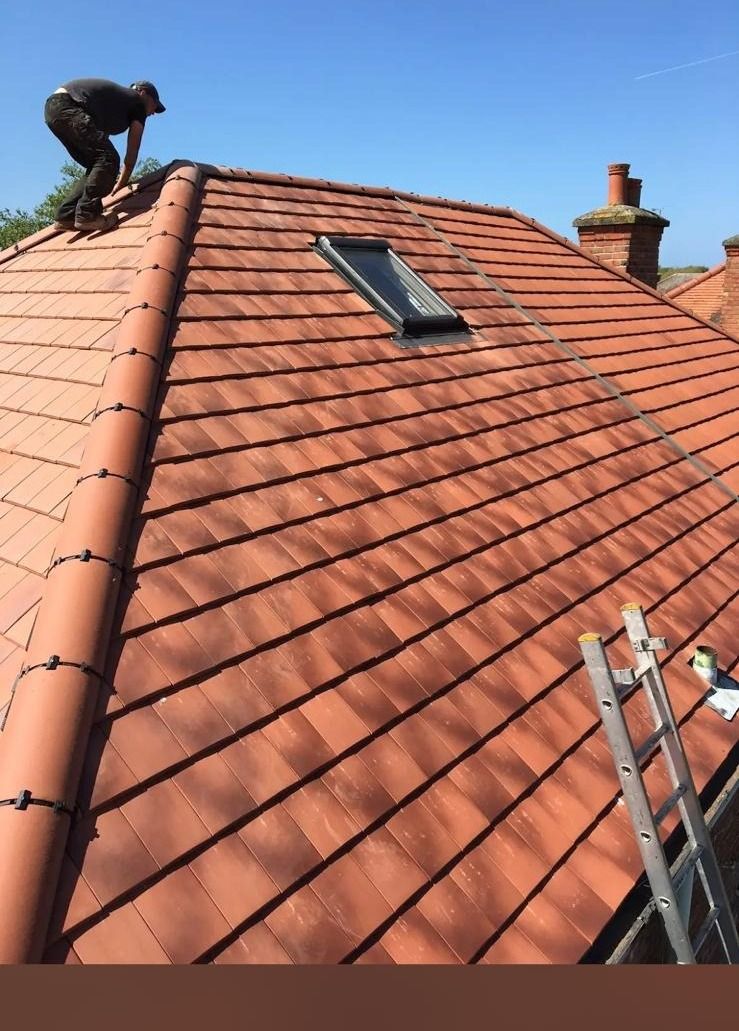
★ Fully insured on every job
Roofing done properly, every single time
Family-run for 30 years, straight-talking roofers based in Formby, working across Merseyside's toughest coastal weather. Roof surveys, honest prices, a written guarantee on every job.
Is your roof ready for winter? Get your chimney checked before the winter in Wallasey. Contact Select Roofing to discuss repairs, maintenance and a free, no-obligation quotation.
Eroded pointing, cracked flaunching, lifted lead — repaired properly across every kind of Wallasey roof. Free quotes across CH44 and CH45. Call 07596 884288.
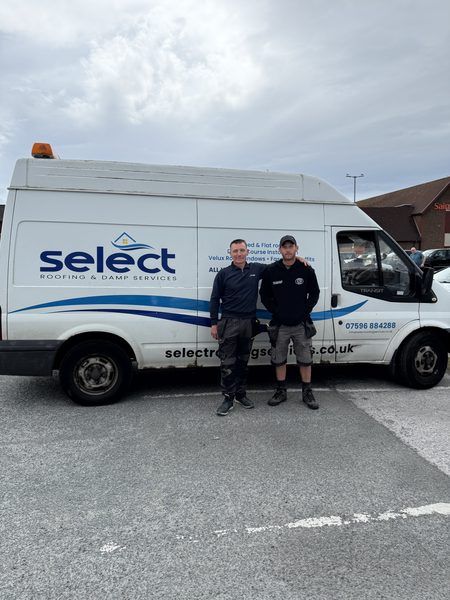
⚡ Contact us for our next available appointment in Wallasey
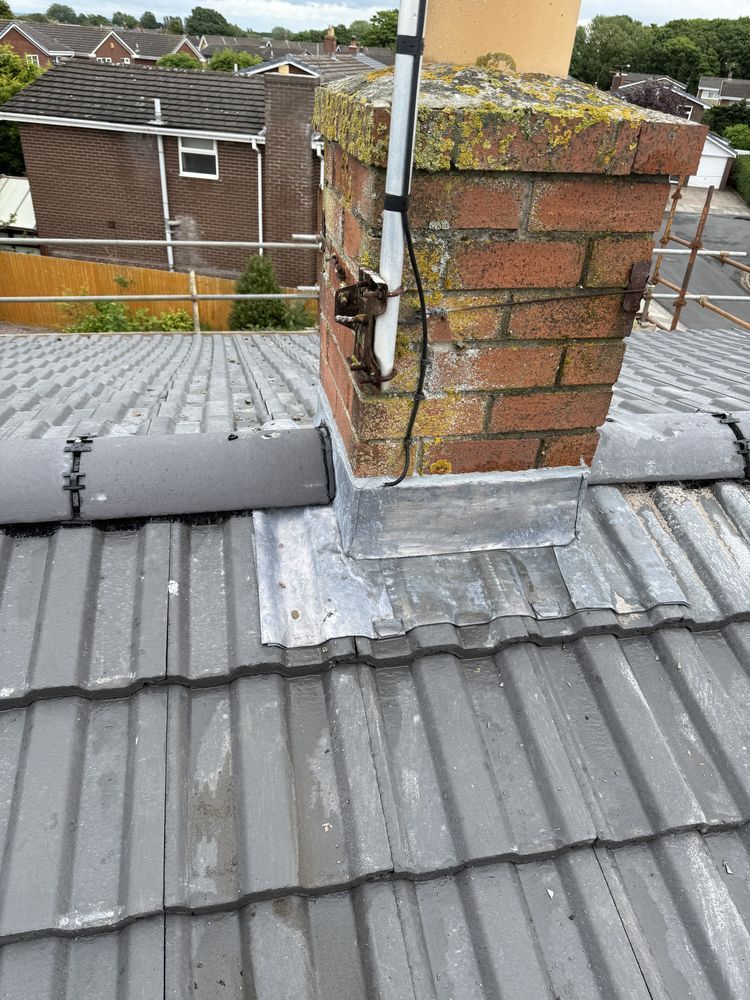
Chimney Repairs — Wallasey, CH44
Wallasey was sparsely populated before the nineteenth century. Its higher ground was originally cut off from the rest of Wirral by the creek known as Wallasey Pool, by marshy ground and by sand dunes along the coast, and the land still only rises from sea level to about 50 metres. Housing accelerated after the Mersey Railway opened in 1886, especially in Liscard and Wallasey Village, while Seacombe was built up with housing for dockworkers and nearby industries and Poulton grew with the docks as an industrial and terraced area.
The settlement area holds 28,692 homes, built in layers, and that is the useful thing to know before anyone quotes. A dock terrace in Seacombe, a post-1886 semi-detached house in Wallasey Village and a twentieth-century infill property are three different roofs with three different chimney problems. The first thing we do is establish which one you have.
On terraced stock the stacks are shared across party walls, so the defect and the damp are frequently in different houses and we photograph both faces. On the later semi-detached and detached stock the stack is the property’s own and the recurring fault is mortar age: flaunching and ridge bedding laid together, failing together.
No conservation area named Wallasey appears on Wirral Council’s list of 26 designated areas, so for most homes here a like-for-like re-roof is usually permitted development, with building regulations still applying. Wellington Road, in neighbouring New Brighton, is designated, and in a designated area in a Wirral conservation area, planning permission is needed to change exterior materials, and the council lists tiles among them. Permission is also needed for roof alterations that raise the ridge height or extend more than 15cm beyond the plane of the roof, and to alter or replace a flue or chimney on a front or side elevation. We are not planning consultants and we do not give planning advice. What we do is tell you the condition of your roof and what putting it right would involve, so you can take the right question to Wirral Council.
📞 Call for a free quoteDock terraces, post-1886 suburbs and later infill. Three roofs, three sets of chimney faults. We establish which first.
The land rises only to about 50 metres, with dunes and open water around it. Exposure is a real factor on most elevations.
Terraces get both faces photographed. On semis and detached houses the stack is yours alone, with nobody to spot it for you.
Every chimney repair carries our written guarantee and the photographs.
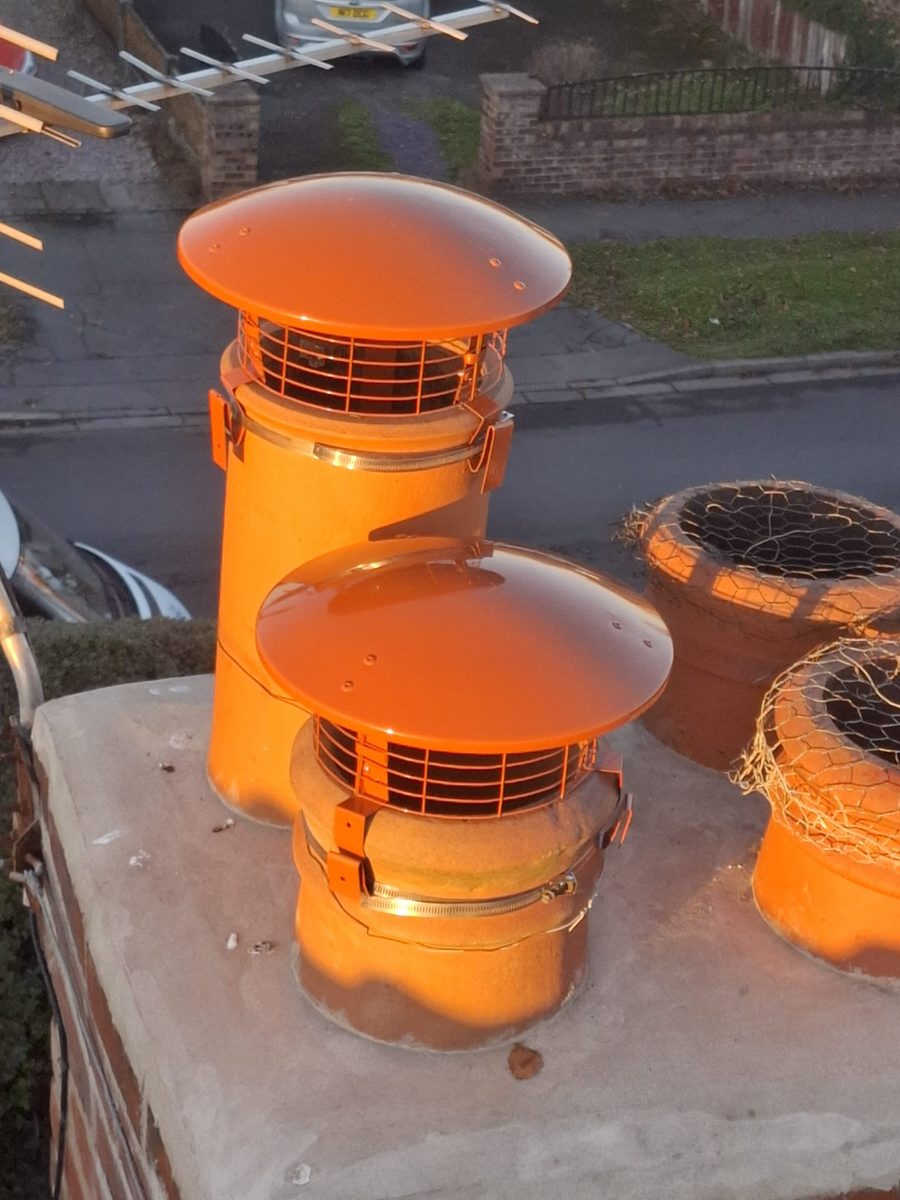
Lead flashing replaced at a stack on an exposed Wallasey roof.
A roof survey is the cheaper way to find out where you stand: our £249 roof survey report in Wallasey records the stack, the flaunching, the pots and the flashings with photographs. For the detail behind the work on this page, see repointing and rebuilding, chimney flashing problems and chimney repairs explained.
Common questions
It matters a lot for a chimney. The settlement area holds 28,692 homes built in layers: dock terraces in Seacombe and Poulton, post-1886 semi-detached and terraced housing in Liscard and Wallasey Village, and twentieth-century infill behind. Those are three different roofs with three different chimney problems, and the first thing we do is establish which one you have.
No conservation area named Wallasey appears on Wirral Council’s list of 26 designated areas, so for most homes here a like-for-like re-roof is usually permitted development, with building regulations still applying to the work itself. Wellington Road, in neighbouring New Brighton, is designated. We are not planning consultants and we do not give planning advice. What we do is tell you the condition of your roof and what putting it right would involve, so you can take the right question to Wirral Council.
Yes. The land only rises from sea level to about 50 metres, with open water nearby and sand dunes along the coast, so there is not much shelter anywhere. Wind-driven rain and salt-laden air reach most elevations, and a chimney stack is the highest and least sheltered masonry on any house. The weather face generally goes years before the sheltered one.
Mortar that crumbles under a thumbnail, open joints between the bricks, white salt staining on the brickwork, pots that lean or move, and damp on the chimney breast inside. If the pointing already looks recessed from the pavement it is overdue. On terraced stock the stacks are shared, so a neighbour with damp is a useful clue about which side the water is entering.
Yes, and it is the most common cowl we fit. The mesh has to suit the fuel — coarser for solid fuel and multi-fuel, finer for gas — and some stove manufacturers advise against a mesh terminal on their appliance, so we check the appliance instructions before fitting one to a working flue. If the stack is being repaired anyway, fitting a guard at the same time costs very little next to the access.
Not while the nest is in use. Under section 1 of the Wildlife and Countryside Act 1981 it is an offence to intentionally take, damage or destroy the nest of any wild bird while that nest is in use or being built, and being a nuisance is not an exception. We will inspect, tell you whether it is active, and clear the flue and fit a guard once it is no longer in use, which is usually from late summer. Do not light the fire in the meantime and do not try to smoke them out.
Cowls and bird guards — Wallasey
Across all 28,692 homes in this settlement area the same thing is true: there are far more pots than working flues, and most of them are open. On low, exposed ground with open water nearby, wind drives rain into them rather than past. A ventilated cap closes a dead flue to the weather while keeping the air movement it needs, and a bird guard does the same on a flue still in use — in a finish that survives salt air.
The mesh has to match the fuel. Solid fuel and multi-fuel guards need a coarser mesh, around an inch square, because those flues run hotter and carry more soot and debris than a fine mesh can pass. Gas appliances take a much finer mesh. Fitting the wrong one is not merely inefficient: a clogged or over-restrictive guard on a live flue can push smoke and combustion gases back into the house. Some stove manufacturers also advise against a mesh terminal on their appliance at all, so we check the appliance instructions before a guard goes on a working flue.
More detail: our chimney pots, cowls and wildlife guide covers the types and the mesh sizes, and we also do cowl fitting, pot replacement and capping for unused stacks.
📞 Ask about a cowl for your stackA mesh cage over the pot. The most common type we fit: it keeps birds and wildlife out of the flue while still letting it draw and ventilate. If a stack is being worked on for any other reason, fitting one at the same time costs very little next to the access.
Usually H-shaped, using the airflow itself to steady the draw. Worth it if an open fire or log burner pushes smoke back into the room on windy days. If the problem persists after one is correctly fitted, the cowl is rarely the fault — the flue is more often undersized, partly blocked, or running too cold to draw.
Cut water entering a flue that is no longer used, without sealing it. A disused flue still needs some air movement: close it completely and the damp shows up on the chimney breast instead. A ventilated cap is the right answer, not a solid one.
Use the wind to pull the draw upward rather than merely resisting downdraught. Worth considering on genuinely exposed sites where a fixed cowl has not been enough. They should turn freely, so they are worth a look at the same time as a sweep.
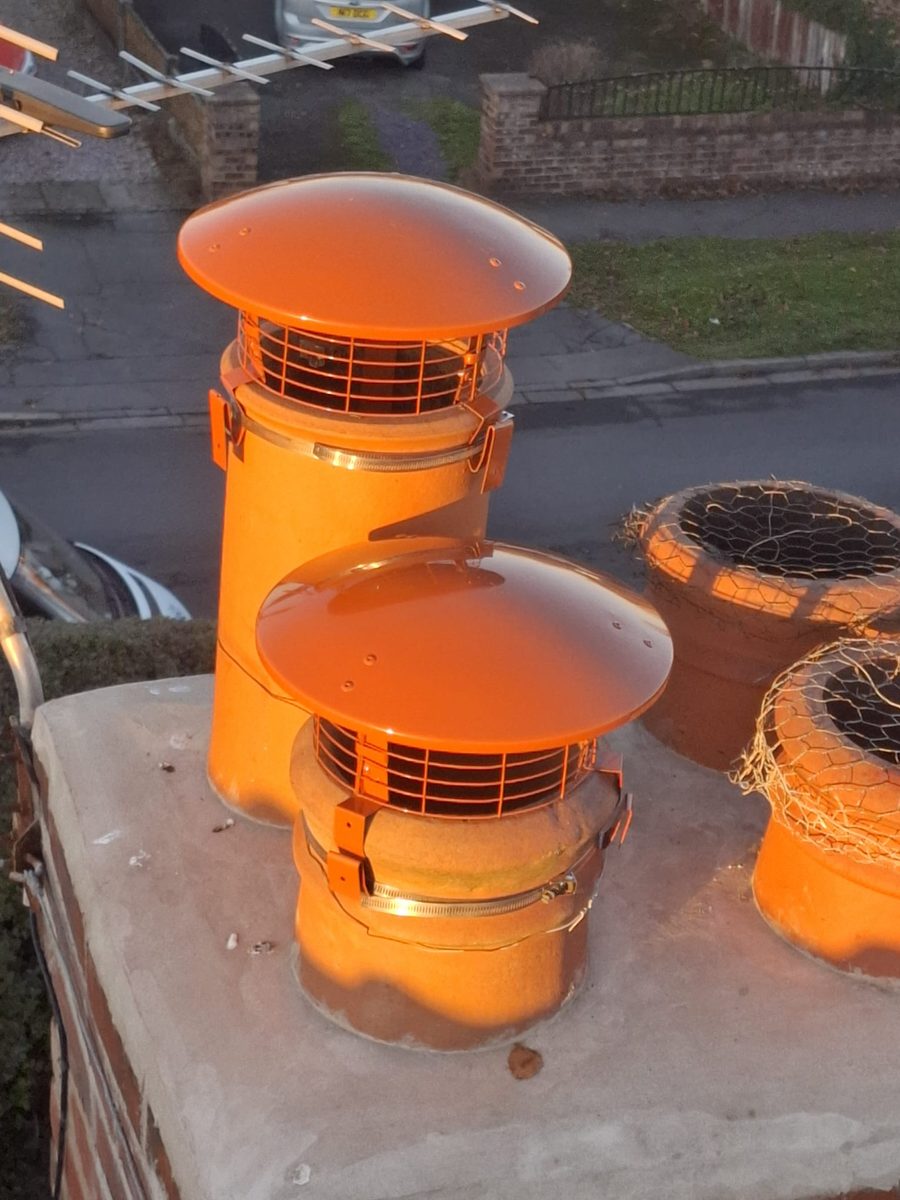
Bird guard cowls bedded into new flaunching — the guard and the flaunching done as one job.
Birds, nests and the law — Wallasey
Jackdaws take to open pots across every kind of Wallasey roof, and they build within days once spring starts. The nest blocks the flue, which is a fire and carbon monoxide risk wherever an appliance is still connected and a source of damp where none is. With no conservation area designation in Wallasey itself, fitting a guard afterwards is normally straightforward.
The law is specific, and it is the reason this cannot simply be cleared on the day. Under section 1 of the Wildlife and Countryside Act 1981 it is an offence to intentionally take, damage or destroy the nest of any wild bird “while that nest is in use or being built”. Being a nuisance is not a reason the law recognises: the RSPB’s position is that birds cannot legally be removed for being a nuisance or an inconvenience.
A nest in a live flue is a fire risk and a carbon monoxide risk, because it blocks the route the combustion gases are meant to take. On a flue that is no longer used it still holds moisture against the inside of the stack, which comes through as staining on the chimney breast. Smoking birds out is the worst option of all — a flue full of dry nesting material is exactly the wrong thing to set alight.
Birds generally start nesting in a dark, enclosed space from March or April, depending on the weather, and a jackdaw can build quickly once it starts. Where a nest is active, the clearance and the guard wait until the young have fledged and the nest is no longer in use — usually from late summer. We will tell you that plainly rather than take the job on and do it anyway.
We inspect first and establish whether the nest is in use. Once it is not, we clear the flue, make good the flaunching if the pots have been disturbed, and fit a bird guard cowl so it does not happen again. Clearing without fitting the guard simply books the same job for next spring.
Bats roost in roofs far more often than in flues, but all UK bat species are protected and it is an offence to damage or destroy a roost whether or not bats are present at the time. If a stack repair means opening up the roof around it, that is worth knowing first — see our bats and re-roofing guide.
If you think birds are nesting in your chimney now, do not try to clear it yourself and do not light the fire. Call us and we will look at it, tell you whether the nest is active, and book the clearance and the guard for when the work is lawful.
Also in Wallasey
Wallasey
Types, process & warning signs
The #1 cause of leaks
Guards, caps and the law
Mortar work on stacks
When a stack has to come down
Across Merseyside
Across Merseyside
Nearby areas
Sefton and the coast
West Lancashire
Liverpool
Wirral
Knowsley and St Helens
Chimney repairs
Chimney repairs
Chimney repairs
Chimney repairs
Chimney repairs
Chimney repairs
Chimney repairs
Chimney repairs
Chimney repairs
Chimney repairs
Chimney repairs
Chimney repairs
Chimney repairs
Chimney repairs
Chimney repairs
Chimney repairs
Chimney repairs
Chimney repairs
Chimney repairs
Chimney repairs
Chimney repairs
Chimney repairs
Chimney repairs
Chimney repairs
Chimney repairs
Chimney repairs
Chimney repairs
Chimney repairs
Chimney repairs
Chimney repairs
Chimney repairs
Chimney repairs
Chimney repairs
Chimney repairs
Chimney repairs
Chimney repairs
Chimney repairs
Chimney repairs
Chimney repairs
Chimney repairs
Chimney repairs
Chimney repairs
Chimney repairs
Chimney repairs
Chimney repairs
Chimney repairs
Chimney repairs
Chimney repairs
Chimney repairs
Chimney repairs
Chimney repairs
Chimney repairs
Chimney repairs
Chimney repairs
Chimney repairs
Chimney repairs
Chimney repairs
Chimney repairs
Chimney repairs
Chimney repairs
Chimney repairs
Chimney repairs
Chimney repairs
Chimney repairs
Chimney repairs
Chimney repairs
Chimney repairs
Chimney repairs
Chimney repairs
Chimney repairs
Chimney repairs
Chimney repairs
Chimney repairs
Chimney repairs
Chimney repairs
Chimney repairs
Chimney repairs
Chimney repairs
What customers say
“They came out the same day, found the problem straight away and had it fixed before the rain came back. Honest price and very tidy. Highly recommended.”
Formby
“Used Select Roofing for a full roof replacement — new concrete tiles throughout. From the initial survey to the final clean-up, they were professional throughout. A credit to the trade.”
Southport
“Called on a Saturday after a storm. They were with us within two hours, made everything safe and came back Monday to complete the repair. Couldn't ask for more.”
Crosby
Contact us today for a free, no-obligation quote. We aim to respond to all enquiries within the hour during working hours.
Get in touch
No obligation, no pressure — just an honest quote from the people who'll actually carry out the work. Fill in the form below or message us directly on WhatsApp, whichever's easier.
Prefer to message us directly?
💬 WhatsApp Us NowTell us what’s happening and we’ll come back to you with a free, no-obligation quote.