★★★★★
“They came out the same day, found the problem straight away and had it fixed before the rain came back. Honest price and very tidy. Highly recommended.”
Formby
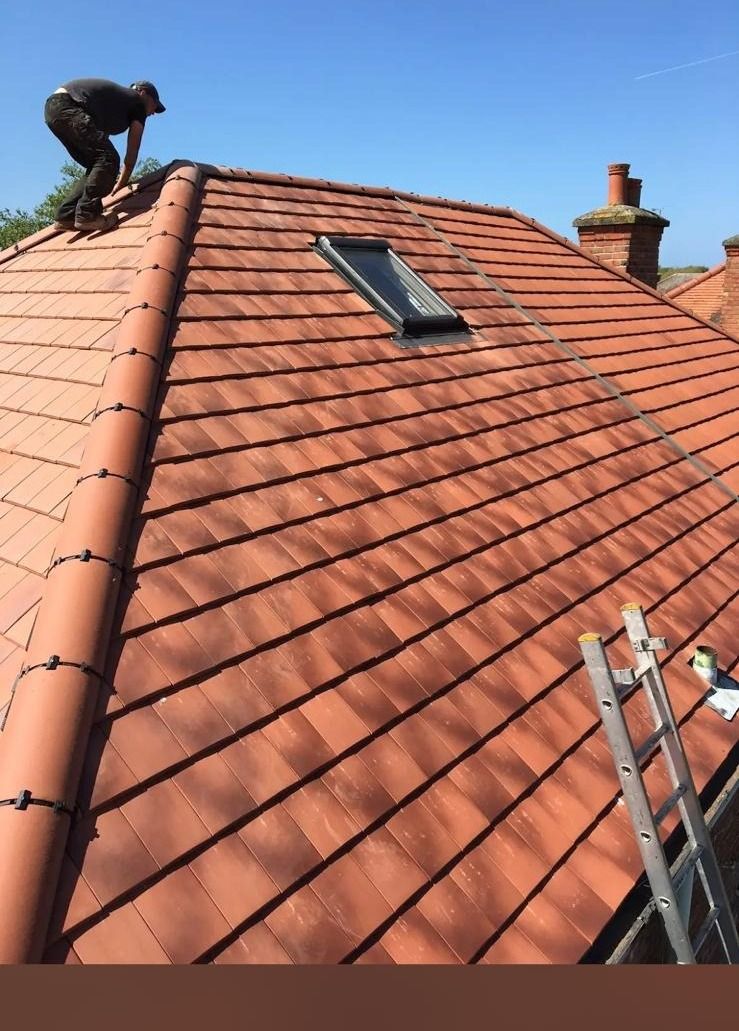
★ Fully insured on every job
Roofing done properly, every single time
Family-run for 30 years, straight-talking roofers based in Formby, working across Merseyside's toughest coastal weather. Roof surveys, honest prices, a written guarantee on every job.
Is your roof ready for winter? Get your chimney checked before the winter in New Brighton. Contact Select Roofing to discuss repairs, maintenance and a free, no-obligation quotation.
Eroded pointing, cracked flaunching, failed leadwork — repaired properly on roofs that are judged on how they look. Free quotes across CH45. Call 07596 884288.
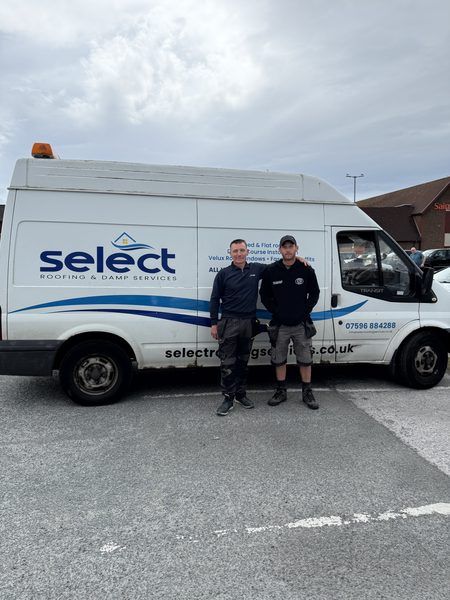
⚡ Contact us for our next available appointment in New Brighton
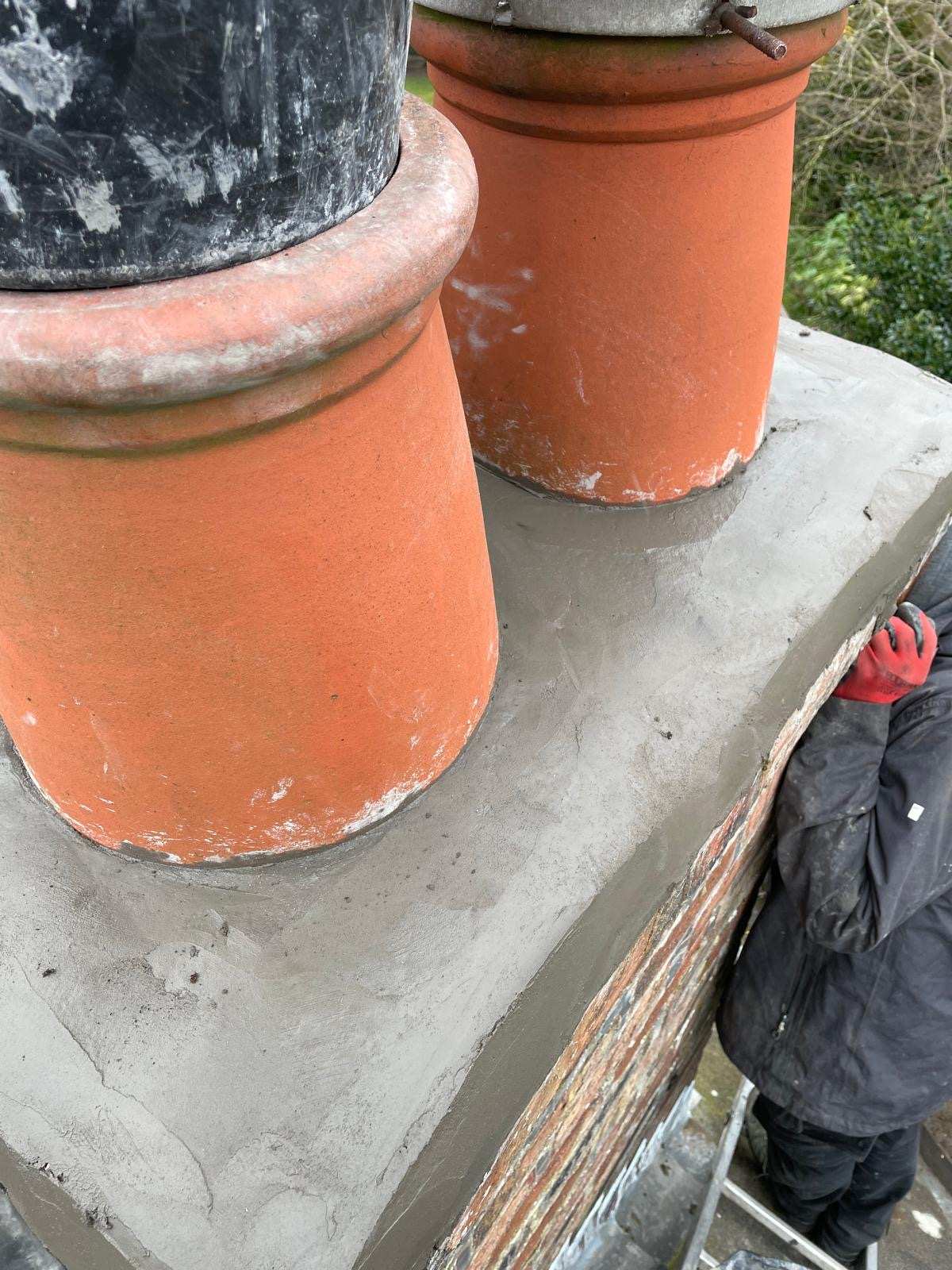
Chimney Repairs — New Brighton, CH45
New Brighton was mostly sand dunes, rock and heather until the Liverpool merchant James Atherton bought 127 acres in 1830 to create a fashionable watering place. Wellington Road was developed first, the earliest villa finished in the autumn of 1835 and most of the rest following from the mid-1830s. Those villas are now one of Wirral’s 26 conservation areas, designated mainly to preserve the line of Regency and early Victorian villas and their terraced gardens.
The roofs are the reason. They are gabled, with barge boarding and decorative detailing, in Classical, Italianate, Vernacular Revival and Gothick styles, and they stand single-storey to the street and two storeys to the sea, built into the slope. On a building like that the roof is not a lid, it is part of the composition, and a chimney stack on a decorated gable is seen as part of that composition rather than as plant.
Which means roof work here is judged on how it looks as well as how it performs. In a Wirral conservation area, planning permission is needed to change exterior materials, and the council lists tiles among them. Permission is also needed for roof alterations that raise the ridge height or extend more than 15cm beyond the plane of the roof, and to alter or replace a flue or chimney on a front or side elevation. New Brighton also holds the only Article 4 Direction on the Wallasey side of the borough, made in 1970 and covering Tower Stadium.
The practical work is unchanged: pointing eroded until the joints are open, flaunching cracked until the pots are loose, and lead that has cracked or lifted at the junction with the slope, with coastal exposure driving all three along faster. What changes is that we record the pot profile, the mortar colour and the detail before anything comes off. We are not planning consultants and we do not give planning advice. What we do is tell you the condition of your roof and what putting it right would involve, so you can take the right question to Wirral Council.
📞 Call for a free quoteThese villas were designated for their gables, barge boarding and decorated detail. A stack is part of that composition.
Pot profile, mortar colour and detail photographed first, so what goes back reads correctly from the street.
Made in 1970, covering Tower Stadium — the only Direction on this side of the borough.
Every chimney repair carries our written guarantee and the photographs.
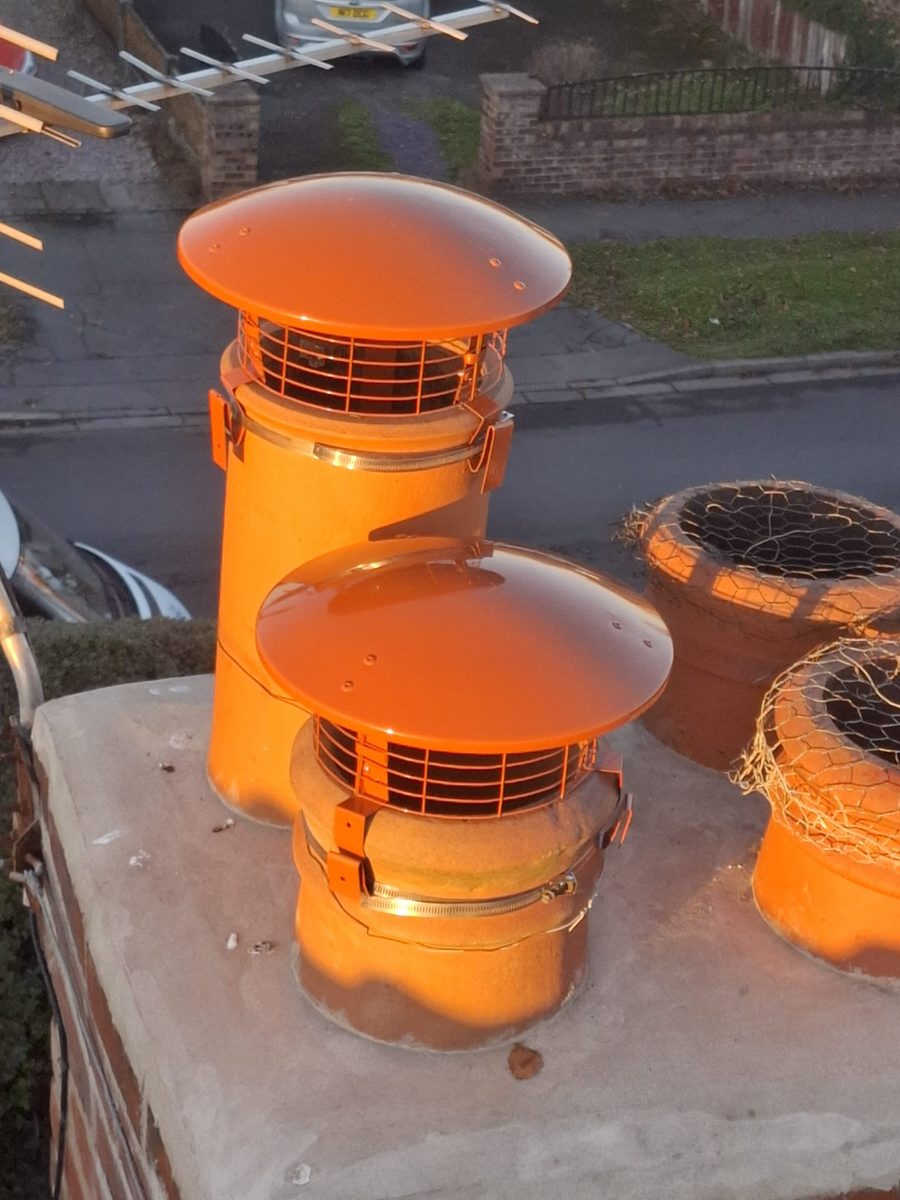
Pots reset into new flaunching, matched to the original profile.
A roof survey is the cheaper way to find out where you stand: our £249 roof survey report in New Brighton records the stack, the flaunching, the pots and the flashings with photographs. For the detail behind the work on this page, see repointing and rebuilding, chimney flashing problems and chimney repairs explained.
Common questions
Because that is what the conservation area is for. Wellington Road is on Wirral Council’s list of 26 conservation areas, designated mainly to preserve the line of Regency and early Victorian villas and their terraced gardens. Those villas have gabled roofs with barge boarding and decorative detailing, so the roofline is the designated feature rather than incidental to it. In a Wirral conservation area, planning permission is needed to change exterior materials, and the council lists tiles among them. Permission is also needed for roof alterations that raise the ridge height or extend more than 15cm beyond the plane of the roof, and to alter or replace a flue or chimney on a front or side elevation.
It was made in 1970 and covers Tower Stadium. It is the only Article 4 Direction on the Wallasey side of the borough. Wirral’s Directions are unusually narrow and tend to attach to particular sites rather than whole areas, which is the opposite of the position across most of Liverpool. We are not planning consultants and we do not give planning advice. What we do is tell you the condition of your roof and what putting it right would involve, so you can take the right question to Wirral Council.
We record before we remove: the pot profile, the mortar colour and the detail at the stack head, all photographed. On a building designated for its appearance, a replacement that reads wrong from the street is a failure even if it performs. Where an exact match is not available we show you the closest options and say plainly how they differ rather than fitting something and hoping.
Considerably. New Brighton faces open water and salt-laden air is harder on mortar and on metal fixings than inland air. Pointing goes sooner on the sea-facing elevation, flaunching cracks earlier, and lead edges lift where the wind has been working on them. On a decorated roof that also means the detailing weathers, which is a conservation question as well as a roofing one.
Yes, and it is the most common cowl we fit. The mesh has to suit the fuel — coarser for solid fuel and multi-fuel, finer for gas — and some stove manufacturers advise against a mesh terminal on their appliance, so we check the appliance instructions before fitting one to a working flue. If the stack is being repaired anyway, fitting a guard at the same time costs very little next to the access.
Not while the nest is in use. Under section 1 of the Wildlife and Countryside Act 1981 it is an offence to intentionally take, damage or destroy the nest of any wild bird while that nest is in use or being built, and being a nuisance is not an exception. We will inspect, tell you whether it is active, and clear the flue and fit a guard once it is no longer in use, which is usually from late summer. Do not light the fire in the meantime and do not try to smoke them out.
Cowls and bird guards — New Brighton
On a villa designated for its roofline, a cowl is a visible addition, and in a Wirral conservation area altering or replacing a flue or chimney on a front or side elevation needs permission. So the order here is: establish what is permitted, then choose the terminal, then fit it. The practical case is as strong as anywhere on the coast — sea air and driven rain through an open pot are what put water into these stacks in the first place.
The mesh has to match the fuel. Solid fuel and multi-fuel guards need a coarser mesh, around an inch square, because those flues run hotter and carry more soot and debris than a fine mesh can pass. Gas appliances take a much finer mesh. Fitting the wrong one is not merely inefficient: a clogged or over-restrictive guard on a live flue can push smoke and combustion gases back into the house. Some stove manufacturers also advise against a mesh terminal on their appliance at all, so we check the appliance instructions before a guard goes on a working flue.
More detail: our chimney pots, cowls and wildlife guide covers the types and the mesh sizes, and we also do cowl fitting, pot replacement and capping for unused stacks.
📞 Ask about a cowl for your stackA mesh cage over the pot. The most common type we fit: it keeps birds and wildlife out of the flue while still letting it draw and ventilate. If a stack is being worked on for any other reason, fitting one at the same time costs very little next to the access.
Usually H-shaped, using the airflow itself to steady the draw. Worth it if an open fire or log burner pushes smoke back into the room on windy days. If the problem persists after one is correctly fitted, the cowl is rarely the fault — the flue is more often undersized, partly blocked, or running too cold to draw.
Cut water entering a flue that is no longer used, without sealing it. A disused flue still needs some air movement: close it completely and the damp shows up on the chimney breast instead. A ventilated cap is the right answer, not a solid one.
Use the wind to pull the draw upward rather than merely resisting downdraught. Worth considering on genuinely exposed sites where a fixed cowl has not been enough. They should turn freely, so they are worth a look at the same time as a sweep.
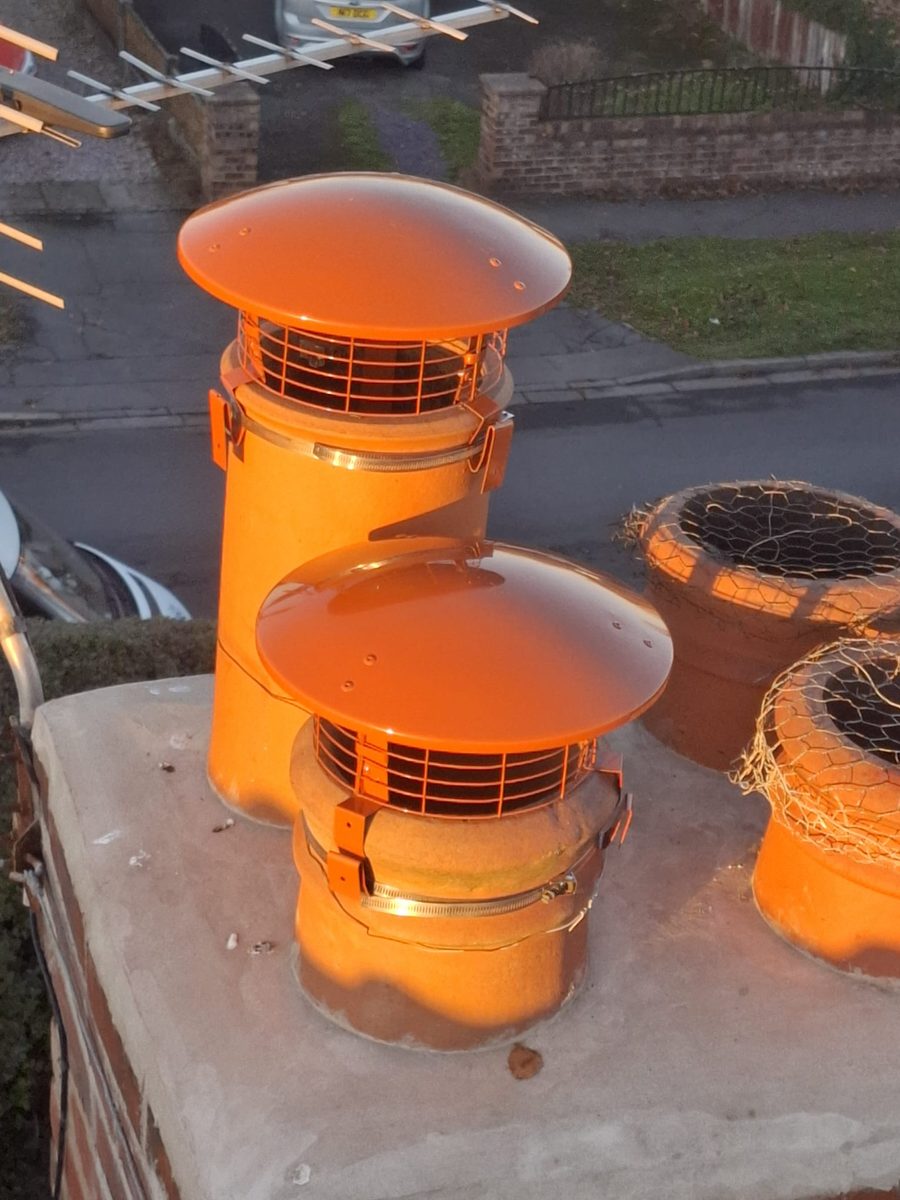
Bird guard cowls bedded into new flaunching — the guard and the flaunching done as one job.
Birds, nests and the law — New Brighton
Jackdaws take readily to open pots on tall villa stacks, and New Brighton’s are tall and prominent. A nest blocks the flue, which is a fire and carbon monoxide risk wherever an appliance is connected below and a source of damp where none is. The clearance waits until the nest is no longer in use. In the Wellington Road conservation area the guard fitted afterwards is an alteration to the chimney.
The law is specific, and it is the reason this cannot simply be cleared on the day. Under section 1 of the Wildlife and Countryside Act 1981 it is an offence to intentionally take, damage or destroy the nest of any wild bird “while that nest is in use or being built”. Being a nuisance is not a reason the law recognises: the RSPB’s position is that birds cannot legally be removed for being a nuisance or an inconvenience.
A nest in a live flue is a fire risk and a carbon monoxide risk, because it blocks the route the combustion gases are meant to take. On a flue that is no longer used it still holds moisture against the inside of the stack, which comes through as staining on the chimney breast. Smoking birds out is the worst option of all — a flue full of dry nesting material is exactly the wrong thing to set alight.
Birds generally start nesting in a dark, enclosed space from March or April, depending on the weather, and a jackdaw can build quickly once it starts. Where a nest is active, the clearance and the guard wait until the young have fledged and the nest is no longer in use — usually from late summer. We will tell you that plainly rather than take the job on and do it anyway.
We inspect first and establish whether the nest is in use. Once it is not, we clear the flue, make good the flaunching if the pots have been disturbed, and fit a bird guard cowl so it does not happen again. Clearing without fitting the guard simply books the same job for next spring.
Bats roost in roofs far more often than in flues, but all UK bat species are protected and it is an offence to damage or destroy a roost whether or not bats are present at the time. If a stack repair means opening up the roof around it, that is worth knowing first — see our bats and re-roofing guide.
If you think birds are nesting in your chimney now, do not try to clear it yourself and do not light the fire. Call us and we will look at it, tell you whether the nest is active, and book the clearance and the guard for when the work is lawful.
Also in New Brighton
New Brighton
Types, process & warning signs
The #1 cause of leaks
Guards, caps and the law
Mortar work on stacks
When a stack has to come down
Across Merseyside
Across Merseyside
Nearby areas
Sefton and the coast
West Lancashire
Liverpool
Wirral
Knowsley and St Helens
Chimney repairs
Chimney repairs
Chimney repairs
Chimney repairs
Chimney repairs
Chimney repairs
Chimney repairs
Chimney repairs
Chimney repairs
Chimney repairs
Chimney repairs
Chimney repairs
Chimney repairs
Chimney repairs
Chimney repairs
Chimney repairs
Chimney repairs
Chimney repairs
Chimney repairs
Chimney repairs
Chimney repairs
Chimney repairs
Chimney repairs
Chimney repairs
Chimney repairs
Chimney repairs
Chimney repairs
Chimney repairs
Chimney repairs
Chimney repairs
Chimney repairs
Chimney repairs
Chimney repairs
Chimney repairs
Chimney repairs
Chimney repairs
Chimney repairs
Chimney repairs
Chimney repairs
Chimney repairs
Chimney repairs
Chimney repairs
Chimney repairs
Chimney repairs
Chimney repairs
Chimney repairs
Chimney repairs
Chimney repairs
Chimney repairs
Chimney repairs
Chimney repairs
Chimney repairs
Chimney repairs
Chimney repairs
Chimney repairs
Chimney repairs
Chimney repairs
Chimney repairs
Chimney repairs
Chimney repairs
Chimney repairs
Chimney repairs
Chimney repairs
Chimney repairs
Chimney repairs
Chimney repairs
Chimney repairs
Chimney repairs
Chimney repairs
Chimney repairs
Chimney repairs
Chimney repairs
Chimney repairs
Chimney repairs
Chimney repairs
Chimney repairs
Chimney repairs
Chimney repairs
What customers say
“They came out the same day, found the problem straight away and had it fixed before the rain came back. Honest price and very tidy. Highly recommended.”
Formby
“Used Select Roofing for a full roof replacement — new concrete tiles throughout. From the initial survey to the final clean-up, they were professional throughout. A credit to the trade.”
Southport
“Called on a Saturday after a storm. They were with us within two hours, made everything safe and came back Monday to complete the repair. Couldn't ask for more.”
Crosby
Contact us today for a free, no-obligation quote. We aim to respond to all enquiries within the hour during working hours.
Get in touch
No obligation, no pressure — just an honest quote from the people who'll actually carry out the work. Fill in the form below or message us directly on WhatsApp, whichever's easier.
Prefer to message us directly?
💬 WhatsApp Us NowTell us what’s happening and we’ll come back to you with a free, no-obligation quote.