Fascias & Soffits
Fascias & Soffits Explained
Fascias and soffits do more work than most homeowners realise: they carry the guttering, ventilate the roof space, and seal the gap that pests use to get into a loft. A fascia and soffit enquiry very often turns into something bigger, because problems here are rarely isolated — rotted timber usually means exposed rafter feet, and damaged soffits usually mean inadequate ventilation. We inspect properly, we never cap uPVC over rotten timber, and we'll tell you honestly when a "quick fascia job" needs to be something more.
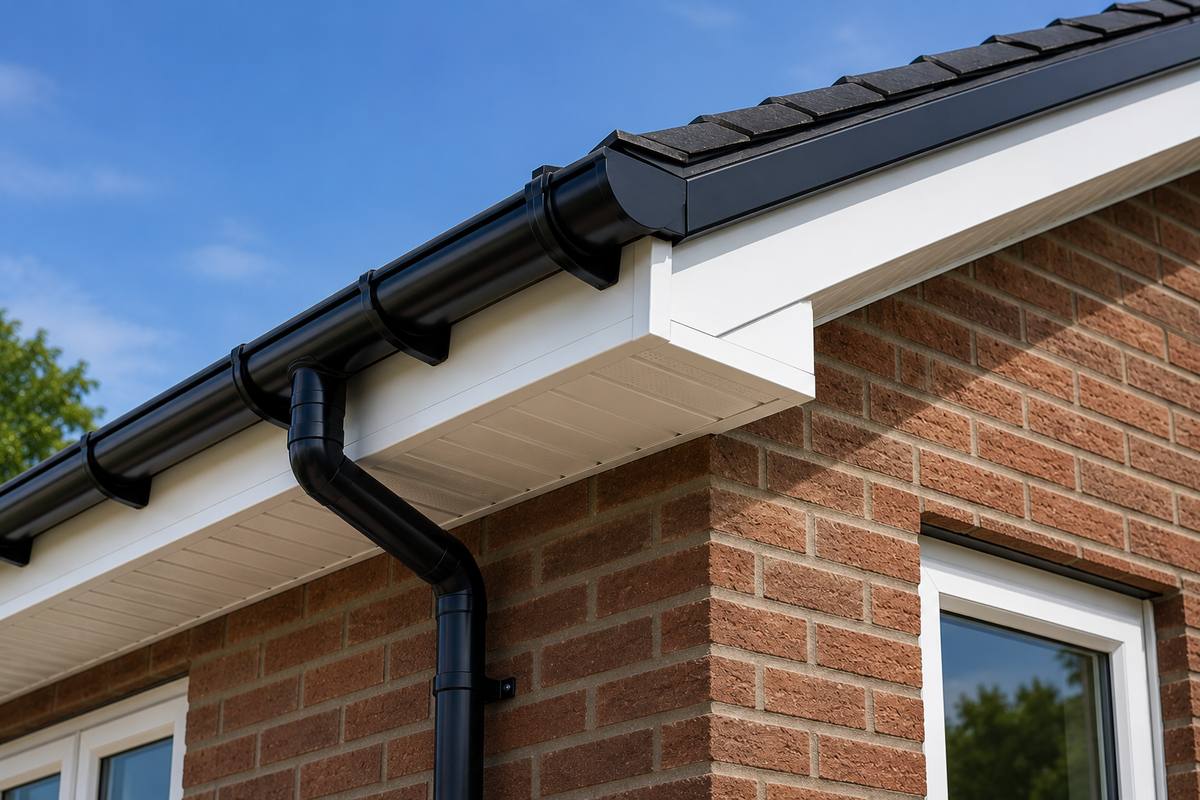
Proper fascia and soffit replacement — timber stripped back, not covered over.
Fascias and soffits get treated as a cosmetic job more often than almost any other part of a roof, and that's exactly why they're a common source of expensive surprises. This guide covers what they actually do, why ventilation and pests matter more than most people expect, and the single most common shortcut to watch for when you're getting quotes.
On this page
What fascias and soffits actually do
Fascia
The horizontal board at the roof edge that carries the guttering and closes the gap between roof and wall, protecting the rafter ends from weather.
Soffit
The board underneath the fascia, closing the underside of the eaves. Often vented — this is the roof's primary air intake.
Bargeboard
The equivalent board at a gable end, taking the most weather exposure of any roofline element and often the first to fail.
Ventilation — why soffits matter more than they look
Current guidance (Approved Document F and C, and BS 5250) requires a continuous ventilation gap equivalent to at least 10mm along both eaves of a typical cold pitched roof, to let moist air escape the roof space before it condenses on cold timber. Vented soffit boards — with small perforations moulded into the board — are the standard way of meeting this without separate vent strips. Get this wrong during a fascia and soffit job — fit solid board where vented was needed, or block the gap with insulation pushed too far into the eaves — and you can trade a cosmetic problem for a genuine condensation and timber-rot risk in the roof space above.
Pests: what damage lets in
Rotted timber, cracked vents and gaps where fascia meets the roofline are the classic entry points for roofline pests:
- Birds — starlings and pigeons commonly nest under poorly maintained eaves. Active nests are protected under the Wildlife and Countryside Act 1981 — disturbing one in use is an offence, which affects timing of any work we do if we find signs of nesting
- Wasps & bees — sheltered voids behind loose or gapped fascia boards are favoured nesting spots, particularly where sealant has failed or timber has warped
- Rodents — squirrels and mice exploit soft, rotted timber, which is easy to gnaw through, and can go on to nest in loft insulation
Cracked or damaged vent covers are a particular weak point — the same opening that's meant to let air through can let birds and insects through too if the mesh has failed or gone missing.
The capping-over-rot shortcut
This is worth understanding before you get quotes. Capping — fitting a uPVC board over existing timber rather than removing it — isn't inherently a bad method. Done over genuinely sound timber, it's a legitimate, cost-effective way to modernise a roofline. The problem is specific and common: some installers cap over timber that's already rotten, without removing and replacing it first. The uPVC looks tidy from the ground. The rot underneath doesn't stop — it continues, unseen, until the fixings it's relying on eventually fail.
Capping done wrong
- Timber condition not properly checked
- Rotten wood covered, not removed
- Looks fine for a few years
- Fails from underneath, often suddenly
Done properly (us)
- Timber inspected before any decision
- Rotten sections cut out and replaced
- Capping only ever used on sound timber
- Full replacement recommended honestly when needed
If you're getting quotes and one is notably cheaper, ask directly whether it involves capping and, if so, how the installer is checking the timber condition first. A straight answer to that question tells you a lot about the quote.
Why this job often leads to other work
A fascia and soffit enquiry is one of the most common ways a genuinely bigger roofing issue gets discovered. Rotted fascia usually means the rafter feet behind it have been exposed to water for some time. Damaged or missing soffit ventilation often means the roof space above has been under-ventilated, sometimes for years. We inspect properly as standard, not as an upsell, and we'll tell you at the outset if what looked like a straightforward fascia job needs to be part of something wider — not discover it once we've started and you're committed.
Our process
We check the actual condition of the timber before recommending anything, never assuming capping is appropriate by default. Rotten sections are cut out and replaced, not covered. Ventilation is checked and corrected where it's inadequate, to current guidance, not left as it was. Every fascia and soffit job is backed by our 10-year written guarantee, and we'll always tell you honestly if what we find means the job is bigger than first thought.
Fascias & soffits, area by area
We carry out fascia and soffit repair and replacement across the whole of Merseyside and West Lancashire, with the same inspection-first process described on this page.
All Merseyside
Main fascias & soffits page
Formby
Fascias & soffits
Southport
Fascias & soffits
Crosby
Fascias & soffits
Hightown
Fascias & soffits
Liverpool
Fascias & soffits
Ormskirk
Fascias & soffits
Maghull
Fascias & soffits
Ainsdale
Fascias & soffits
Birkdale
Fascias & soffits
Bootle
Fascias & soffits
Waterloo
Fascias & soffits
Aintree
Fascias & soffits
Blundellsands
Fascias & soffits
Aughton
Fascias & soffits
Lydiate
Fascias & soffits
Kirkby
Fascias & soffits
Litherland
Fascias & soffits
Churchtown
Fascias & soffits
Banks
Fascias & soffits
Burscough
Fascias & soffits
Crossens
Fascias & soffits
Marshside
Fascias & soffits
Thornton
Fascias & soffits
Frequently Asked Questions
Summary
Fascias and soffits look like a cosmetic job, but they carry your guttering, ventilate your roof space, and stand between your loft and every bird, wasp and rodent trying to get into it. The single question worth asking any installer is whether they're checking what's underneath before they cap it — because that answer tells you whether you're getting a proper repair or a problem hidden behind tidy plastic.
Fascias or soffits showing signs of damage?
Honest inspection, no capping over rot, proper ventilation — anywhere across Merseyside.
Related guides
Fascias, Soffits & Guttering
How the whole roofline system works
Gutters Explained
The other half of the roofline
How a Roof Is Built
Ventilation & construction basics
Bats & Re-Roofing
Wildlife legal protections
Roof Repairs Explained
When it goes beyond the roofline
Roofer Red Flags
What else to watch for in a quote