Bungalow Roofing Guide
Dormer Bungalow Roof Leaks: Where the Water Gets In
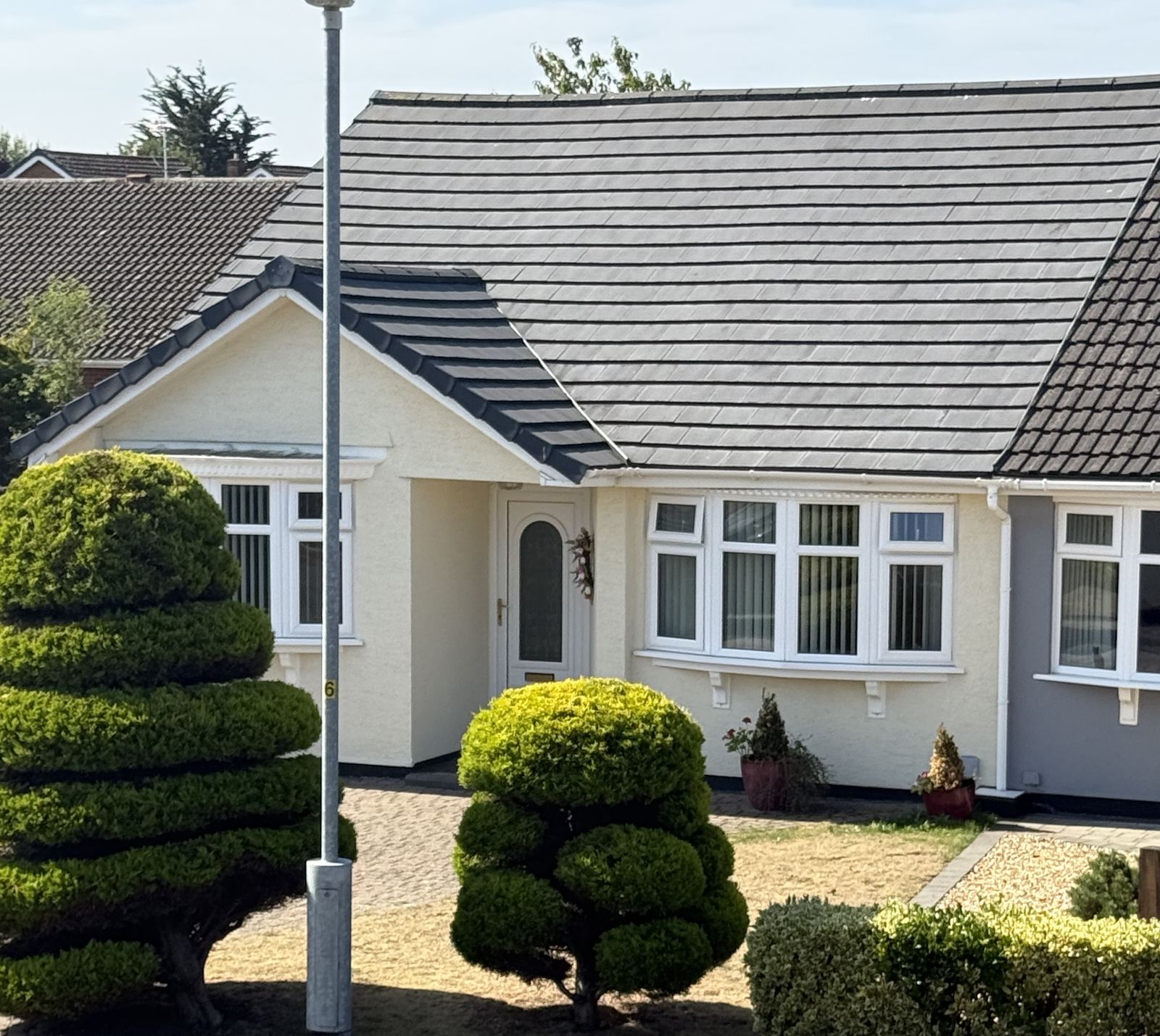
Formby, Maghull, Lydiate and Aughton have thousands of dormer bungalows: single-storey homes that had a bedroom put in the roof in the 1970s and 80s, with a box dormer or two on the rear slope and sometimes the front. They are good houses. Their dormers are, as a rule, the worst-built part of the roof, and when a dormer bungalow leaks, it is the dormer nine times out of ten.
Why dormers fail
A dormer is a small flat-roofed building sitting on a pitched roof, with a junction on every side. It was usually built by a joiner or a general builder rather than a roofer, to a budget, with the flashings done last and least. It has a flat top in felt or GRP, two vertical cheeks in tile-hanging or cladding, a front with a window, and a back where it meets the main roof. Every one of those is a place water can get in, and none of them is visible from the ground.
The five leak points, in order of likelihood
- The flat top. Felt from the 1980s with a life of 15 years, now 40 years old, pooling because the fall was never right. Cracked, blistered, lifting at the edges. Fix: strip and re-cover in GRP or EPDM with a proper fall and drip edge.
- The back gutter and apron flashing. Where the dormer meets the main roof behind it. Often formed in a scrap of lead too short to turn up properly, or in felt. Water runs off the main roof, hits the dormer and goes in behind. Fix: new lead back gutter and apron, dressed on site.
- The cheek junctions. Where the vertical sides of the dormer meet the tiles. Should be soakers under every tile course and a cover flashing; often just mortar. Fix: strip the tile courses either side, fit soakers and a lead cover flashing.
- The window head. Water tracking down the front of the dormer and into the frame. Often blamed on the window; usually the fascia and flashing above it. Fix: re-flash the head and re-seal.
- Condensation, not a leak at all. The dormer is a cold box: thin walls, no insulation, no ventilation. Warm bedroom air hits the cold inside face and drips. It looks exactly like a leak and appears in cold weather rather than rain. Fix: a warm-roof rebuild, not a roofer chasing a leak that isn’t there.
How to tell which one you have
Note when the stain appears. Wet after heavy rain from the west: back gutter or cheeks. Wet after any rain, growing slowly: flat top. Wet on cold, still mornings with no rain: condensation. Wet around the window only: head flashing. We still inspect all five, because dormers rarely have only one fault.
Repair or rebuild?
A single failed flashing is a repair, and we do plenty from a ladder or a small tower on a bungalow. But when the flat top has gone, the cheeks are leaking and the room below is damp on cold mornings, the honest answer is to rebuild the dormer as a warm roof: insulation above the deck, a new GRP top, proper soakers and lead, and a ventilated void. It stops the leaks, cures the condensation and makes the bedroom usable in January. If the main roof is due, doing both at once shares the scaffold. Our dormer warm roof upgrade page covers the build in detail.
Questions we get asked
Why does my dormer bungalow leak only when it rains from one direction?
Because the leak is at a junction, not in the covering. A back gutter or cheek flashing faces one way; rain driven at it gets in, rain from elsewhere runs off. That pattern points to the flashings, and it is the most common dormer fault we find in Formby and Maghull.
The dormer ceiling is wet but it has not rained. What is going on?
Almost certainly condensation. A 1970s dormer is an uninsulated, unventilated box; warm air from the bedroom condenses on the cold inside face of the flat roof and drips. It appears in cold weather regardless of rain. A warm-roof rebuild cures it; a roofer patching the top will not.
Can a dormer be repaired without scaffolding?
Flashing and flat-top repairs on a rear dormer are often reachable from a tower on a bungalow. A full dormer rebuild needs scaffold, and if the main roof is due we plan both together to share it.
How long does a dormer rebuild take?
Two to three days for a typical rear box dormer, longer if there are two or the main roof is being replaced at the same time. The room stays weathertight throughout.
Not sure what your roof needs?
We offer free inspections across Merseyside. We go up, take photos, show you what we find and give you an honest recommendation. No pressure, no obligation.