Roof Leaks
Roofers: Gutter Overflow or Roof Leak?
A damp patch near an external wall, or water tracking down inside near a window, can come from an overflowing gutter just as easily as an actual roof leak — and from inside the house, they can look identical. The clearest clue is timing and location: gutter overflow shows up specifically during heavy rain and tends to follow a wall rather than appear as a ceiling patch. Getting the diagnosis right matters, because the fix, and the cost, are completely different.
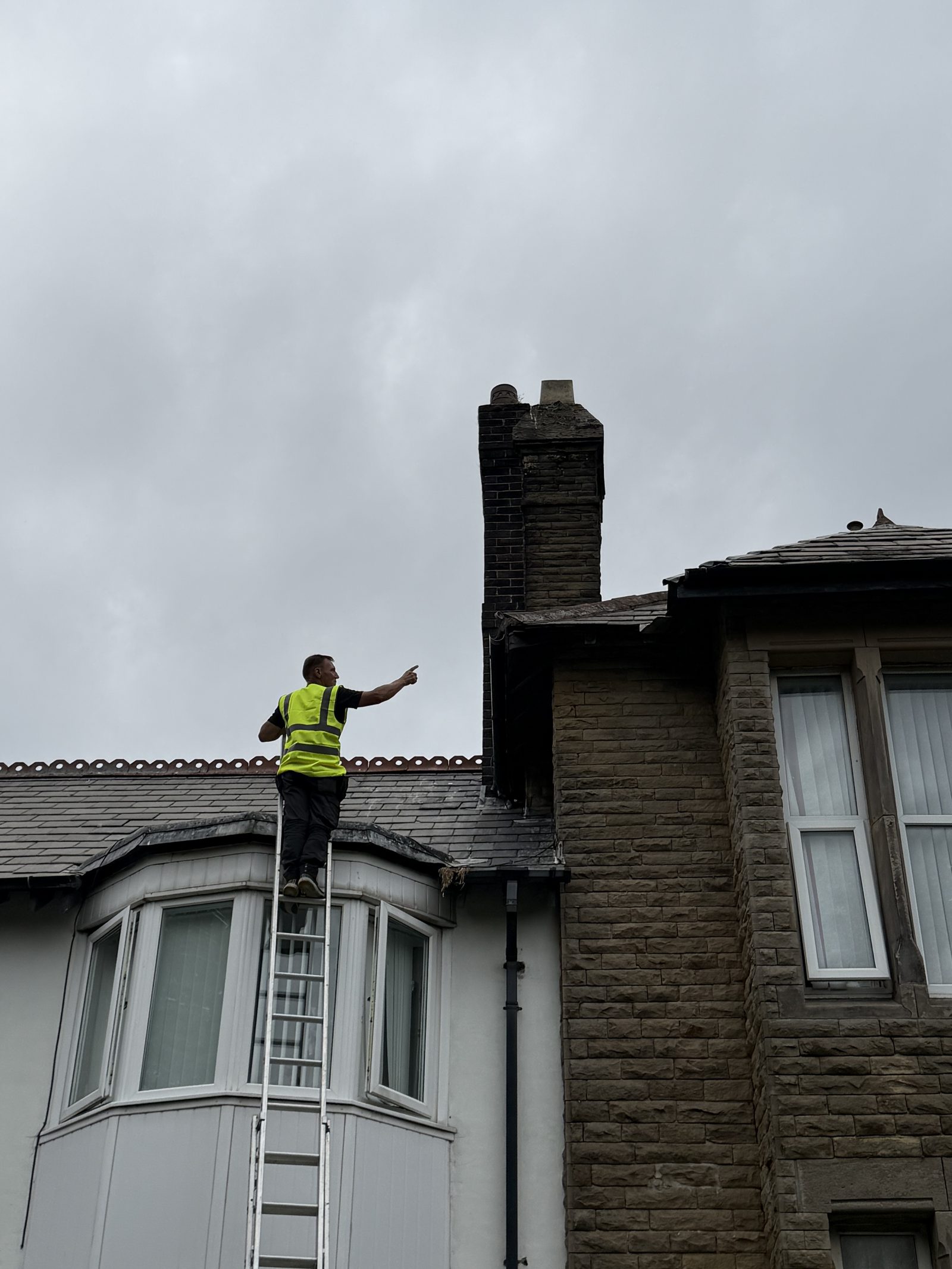
We get called out fairly often to look at a "roof leak" that turns out to be nothing to do with the roof covering at all — it's the gutters. It's an easy mistake to make, and an understandable one, since both problems show up as damp inside the house. But treating one as the other means paying for the wrong repair.
Why they get confused
Water doesn't announce where it came from. Whether it's getting in through a failed roof covering or running down the outside of a wall from an overflowing gutter, what you actually see inside is often the same thing: a damp patch, a stain, or water tracking down near a window or the top of a wall. Without getting up and looking at both the roof and the guttering directly, it's genuinely hard to tell which one you're dealing with from the symptom alone.
Signs that point to gutter overflow
- Staining appears specifically during, or straight after, heavy rain — and dries up or fades between wet spells
- The staining or damp follows a vertical line down an external wall, rather than appearing as a patch in the middle of a ceiling
- You can actually see water cascading over the edge of the gutter during rain, rather than draining through the downpipe
- The problem coincides with a season you know the gutters haven't been cleared — autumn leaf-fall is the classic trigger
Signs that point to an actual roof leak
- Damp or staining that's present even after light rain, not just heavy downpours
- A stain or patch appearing well away from any external wall — in the middle of a ceiling, for instance
- You can trace the source back towards a specific roof feature — a chimney, a valley, or a particular area of tiles
- The problem has been getting gradually worse over weeks or months, rather than only showing up in storms
What actually causes gutter overflow
Blocked gutters. By far the most common cause — leaves, moss, and general debris build up until water simply has nowhere to go but over the front edge.
Incorrect fall. Guttering needs a slight, consistent fall towards the downpipe. Get that wrong during installation and water pools or overflows even when the gutter itself is perfectly clear.
Undersized guttering. Older guttering sized for a smaller roof area, or for lighter rainfall than it now regularly sees, can be overwhelmed in genuinely heavy rain even when clear and well-maintained.
Failed joints or damaged sections. A separated joint or a cracked length of gutter lets water escape at one specific point rather than reaching the downpipe at all.
Why getting this right matters
Beyond the cost of paying for the wrong repair, there's a second reason to get an accurate diagnosis: a gutter that's been overflowing for a while doesn't just cause an occasional damp patch. Constant water running down the same section of wall works its way into brickwork over time, especially anywhere the pointing has already started to weather — a slower, separate problem from a roof leak, but one that gets worse the longer the overflow continues.
If you're not sure whether it's your roof or your gutters, we check both together as part of any free inspection — we'll tell you honestly which one it actually is before recommending any work.
Not sure what your roof needs?
We offer free inspections across Merseyside. We go up, take photos, show you what we find and give you an honest recommendation. No pressure, no obligation.