Insulation
Insulation Explained
Insulation isn't just an energy-bill decision. Building Control has a genuine role when insulation coincides with a re-roof or involves cavity walls, EPC ratings carry real legal weight for landlords under MEES, and mortgage lenders increasingly factor energy performance into their decisions. We install to current standards, keep ventilation clear, and won't install spray foam at any price — because the things that make insulation cheap to fit are often the same things that cause expensive problems later.
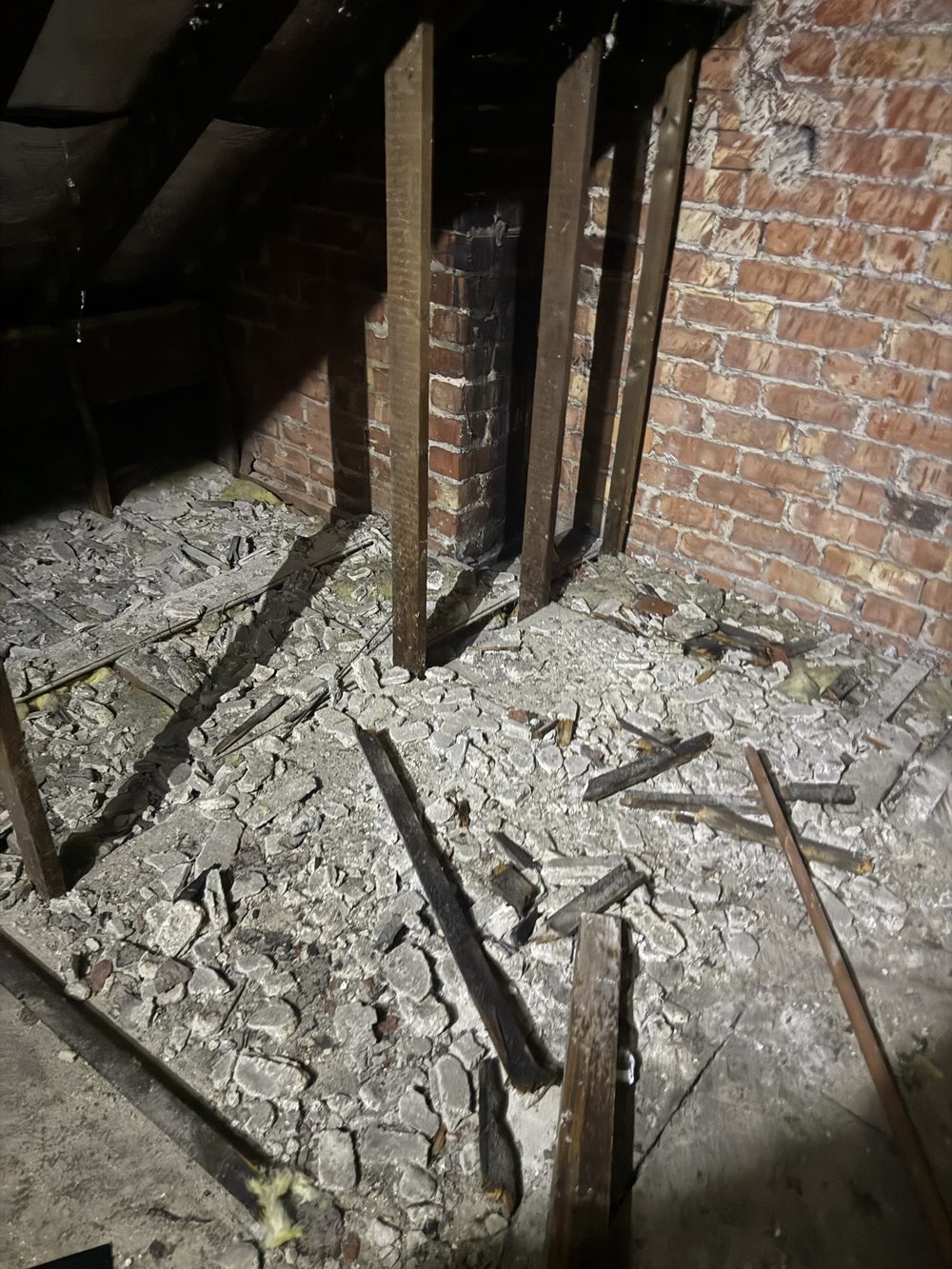
A proper loft assessment before insulation goes anywhere near it.
Most people think of insulation purely as an energy bill decision. It's also a regulatory one, a legal one for landlords, and increasingly a mortgage one. This guide covers the parts most insulation companies skip over — what Building Control actually requires, how EPC ratings work and why they matter legally, why some lenders care, and the ventilation mistake that turns cheap insulation into an expensive problem.
This page explains the general regulatory landscape around insulation to help you understand the decisions involved. It isn't legal or financial advice specific to your property, tenancy, or mortgage. For anything binding, check current gov.uk guidance or speak to a qualified adviser, letting agent, or broker.
On this page
Building Control & Part L
Straightforward loft insulation top-ups generally don't require separate Building Control notification when installed to current standards by a competent installer. That changes in two situations worth knowing about:
- Insulation alongside a re-roof. Where more than 25% of the roof covering is being renewed, Building Regulations Part L requires the insulation itself to meet current standards as part of that project — you can't do the roof and leave the insulation as it was if it falls short.
- Cavity wall insulation. This is treated as a controlled building operation in its own right, requiring BBA-certified material and installation by a registered installer, with a pre-installation survey to confirm the cavity is suitable.
We'll tell you honestly which situation applies before quoting — not assume the simplest, cheapest answer applies by default.
EPC ratings & MEES
An Energy Performance Certificate rates a property from A (most efficient) to G (least efficient), and it carries genuine legal weight if you're a landlord. Under the Minimum Energy Efficiency Standards (MEES), the current legal minimum for privately rented properties in England and Wales is band E — letting a property rated F or G is unlawful without a valid, registered exemption.
The government has proposed raising the minimum to band C, though the exact timeline has shifted during consultation and isn't fully settled as of this update — if this affects a property you let, check current gov.uk guidance rather than relying on a date you've seen elsewhere. What's not in doubt: loft and cavity wall insulation are consistently among the most cost-effective ways to improve an EPC rating, because heat loss through the roof and walls is significant in most UK homes. If you've had insulation work done since your EPC was last issued, it's often worth commissioning an updated certificate — the improvement won't show until you do.
If you're a landlord thinking about EPC compliance alongside wider roof condition, see our landlord & portfolio roof survey page.
Why some lenders care
Energy performance is factoring into mortgage decisions more than it used to. Some lenders now offer green mortgage products tied to EPC rating, and energy efficiency is increasingly part of standard valuation and risk assessment even outside dedicated green products. Whether this affects a specific purchase or remortgage depends entirely on the lender and product — this is genuinely worth checking with your lender or broker directly rather than assuming, since practice varies and is still evolving.
The ventilation mistake
This is the detail that separates a proper insulation job from a problem waiting to happen. Loft spaces need a clear ventilation path at the eaves — roughly 25mm as a minimum, more in some situations — to let moisture escape from the roof space. Insulation fitted carelessly right up to and over the eaves blocks that path, and trapped moisture condenses on cold surfaces instead of venting away, leading to damp timber and, over years, genuine structural decay. It's one of the most common mistakes in insulation work precisely because it's invisible immediately after installation and only becomes obvious once the damage has started. We check and maintain ventilation as standard on every job, using baffles or trays where needed to guarantee the gap stays clear.
Why we won't install spray foam
Spray foam insulation is cheap and fast to apply, which is exactly why it's pushed so heavily by some installers. It can trap moisture against roof timbers where it can't be seen or easily inspected, and it has caused genuine, well-documented difficulty for homeowners trying to sell or remortgage properties where it's been installed, since some surveyors and lenders treat it as a red flag requiring further investigation or removal. We won't install it at any price, regardless of what it would mean for us commercially. See our full spray foam warning guide for the complete picture, including removal if you've already got it.
Grants & funding
Insulation grant schemes exist for eligible households, though scheme names and eligibility criteria change over time. See our dedicated insulation grants & ECO4 guide for current details rather than relying on this page, since funding schemes are one of the fastest-changing parts of this whole subject.
Our process
- Loft survey. We check existing depth and condition, look for damp or pre-existing damage, and identify obstructions before recommending anything.
- Ventilation check. We confirm eaves ventilation is clear and will remain clear once insulation is added.
- Building Regs check. Where the work coincides with a re-roof affecting more than 25% of the covering, or involves cavity walls, we confirm what Building Control notification applies before starting.
- Installation to current standard, not just a token top-up.
- Documentation. Useful if you later commission an updated EPC, or need evidence of the work for a lender or buyer.
Insulation, area by area
We carry out insulation surveys and installation across the whole of Merseyside and West Lancashire, with the same standards and honesty described on this page.
All Merseyside
Main insulation page
Formby
Insulation
Southport
Insulation
Crosby
Insulation
Hightown
Insulation
Liverpool
Insulation
Ormskirk
Insulation
Maghull
Insulation
Ainsdale
Insulation
Birkdale
Insulation
Bootle
Insulation
Waterloo
Insulation
Aintree
Insulation
Blundellsands
Insulation
Aughton
Insulation
Lydiate
Insulation
Kirkby
Insulation
Litherland
Insulation
Churchtown
Insulation
Banks
Insulation
Burscough
Insulation
Crossens
Insulation
Marshside
Insulation
Thornton
Insulation
Frequently Asked Questions
Summary
Insulation looks simple from the outside — roll it out, job done. Done properly it involves knowing when Building Control applies, understanding what your EPC rating actually means legally if you let a property, keeping ventilation clear so you don't trade a heating bill for a damp problem, and being honest about materials that cause more harm than good. That's the standard we hold every insulation job to.
Thinking about insulation?
Free loft survey, honest advice on Building Control and EPC impact, no spray foam upsell — anywhere across Merseyside.
Related guides
Insulation Grants & ECO4
Current funding schemes
Spray Foam Warning
Why we won't install it
Free Loft Insulation Survey
Book a no-obligation assessment
Landlord & Portfolio Surveys
EPC meets roof condition
How a Roof Is Built
Ventilation & construction basics
Loft & Attic Cleaning
Before insulation goes in