Roof Leaks
Roofers: Loose Ridge Tile
Ridge tiles sit at the highest, most wind-exposed point on the roof, capping the join where two slopes meet. Traditionally bedded in mortar, which cracks and erodes over 10–15 years, they're now expected under BS 5534 to be mechanically fixed as well — either a proper dry ridge system or mortar combined with clips. A loose ridge tile rarely fails dramatically at first, but in strong wind it can be dislodged completely, which is both a falling-object risk and an open route for water straight into the roof space.
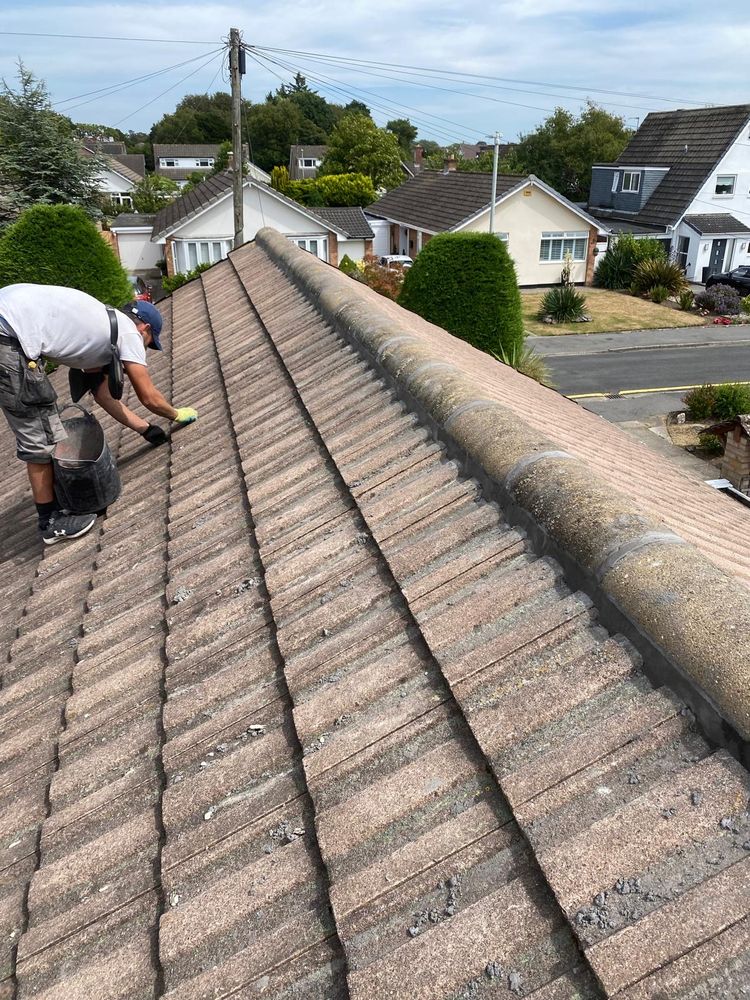
A loose ridge tile is one of those problems that looks minor from the ground and gets treated that way — until a windy night turns it into something else entirely. We'd rather explain why it deserves more attention than it usually gets than wait for that call.
What ridge tiles do
Ridge tiles cap the apex of a pitched roof, covering the join where two slopes meet at the top. They're the last piece to go on during a re-roof — every course of tiles has to reach the top before the ridge is fixed — and they're usually the first thing to fail if that fixing wasn't done properly. Without them, wind, rain, and birds have a direct route straight into the roof space.
Mortar bedding vs dry ridge systems
Traditionally, ridge tiles are bedded and pointed in mortar. Done well, with the right mix, it can hold up for years — but mortar is sensitive to weather, workmanship, and simple age, and typically needs repointing every 10–15 years as it cracks and erodes.
Since BS 5534 was updated in 2014, mortar bedding on its own is no longer considered sufficient for new work or a full re-roof. The standard now expects mechanical fixing as well — either a proper dry ridge system (mechanical clips and a ventilated seal, no mortar at all) or mortar combined with supplementary clips. Mortar-only bedding is still acceptable for repairs to an existing roof, and on heritage or listed properties where a dry ridge system's appearance isn't appropriate — but even then, it's the weaker option long-term. A properly fitted dry ridge system can go 20+ years with little to no maintenance.
Why it comes loose
Mortar failure. The most common cause on older roofs — the mortar bed cracks, erodes, or loses its grip on the tile, and the tile itself is left resting in place rather than actually fixed.
Wind and storm exposure. The ridge is the highest point on the roof and takes the most direct wind loading of any tile on the structure — a genuine factor across exposed parts of Merseyside, particularly near the coast.
Age. Even a well-installed mortar bed has a working life, and it's rarely obvious from the ground that it's approaching the end of it.
Signs to look for
- A ridge tile visibly out of alignment with the others, or sitting at a slightly different angle
- Loose mortar debris in the gutter or on the ground below the ridge line
- Daylight visible through the ridge from inside the loft, on a bright day
- A new or worsening leak that seems to trace back to the highest point of the roof
Is it an emergency?
It's rarely a dramatic failure at first — a loose ridge tile can sit there for a while looking basically fine. But it doesn't tend to improve on its own, and the risk isn't just a slow leak: in strong wind, a genuinely loose ridge tile can be dislodged completely, which is both a falling-object hazard to anyone below and an open gap straight into the roof space. If you can see a tile that's visibly shifted, or you've had recent high winds and are now noticing debris or a new leak, it's worth getting looked at sooner rather than later.
What proper repair involves
We wouldn't recommend re-bedding a ridge tile yourself. It means working at height on the most exposed part of the roof, and getting the bedding or mechanical fixing wrong is exactly how a tile ends up loose again within a year or two — we bring our own access equipment and do the job properly rather than leave you to make it safe alone. Depending on the roof and what's there already, proper repair means either re-bedding in fresh mortar with supplementary mechanical clips, or fitting a full dry ridge system if the existing bedding has failed more broadly along the ridge line rather than at just one tile.
If you've spotted a ridge tile out of line, or you're finding debris after a windy night, we'll take a look, show you what we find, and give you an honest recommendation — not just cement it back down and hope.
Not sure what your roof needs?
We offer free inspections across Merseyside. We go up, take photos, show you what we find and give you an honest recommendation. No pressure, no obligation.