Moss Removal
Moss Removal Explained
Moss removal is one of the easiest jobs to get badly wrong. Pressure washing — the fastest, cheapest method — can blast mortar out of ridge and hip pointing, strip tile coatings, and force water beneath tiles into the felt. A moss-only operator without roofing training may not recognise that damage, or report it if they do. We remove moss the way roofing bodies actually recommend, and because we're roofers, we check the roof properly while we're up there — not just clean it and leave.
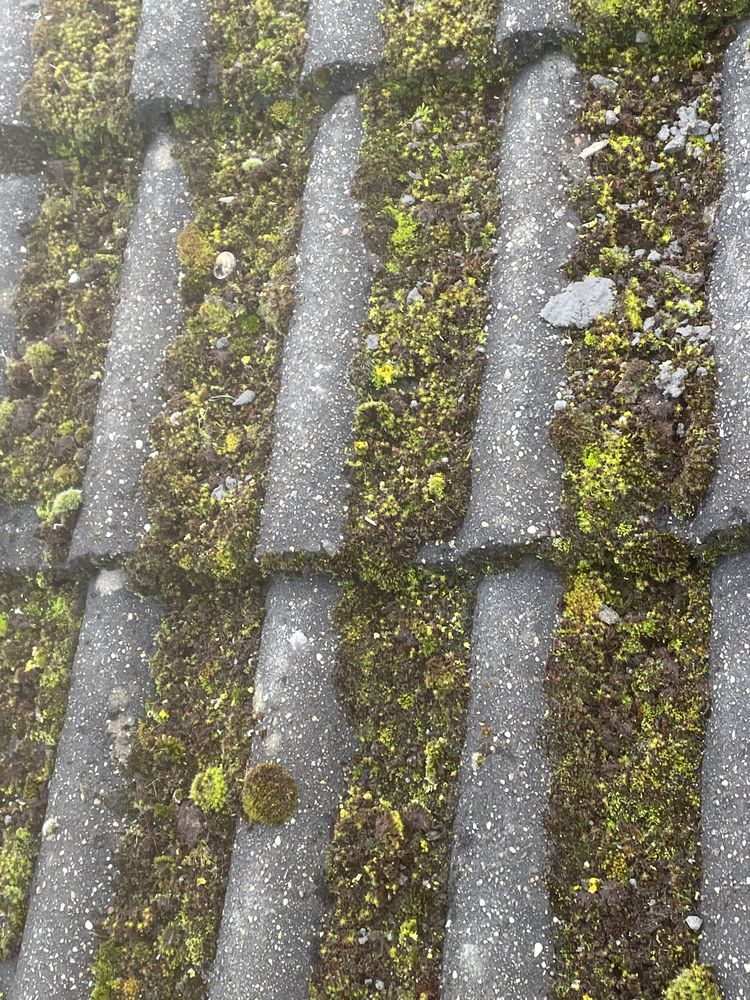
Moss build-up like this needs the right method — the wrong one causes more damage than it fixes.
Moss is one of the most common things people call a roofer about, and one of the most common jobs done badly by people who aren't roofers. The fast, cheap way to remove it — a pressure washer — is also the way most likely to cause damage that isn't visible until weeks or months later. This guide explains what actually goes wrong, why it happens, and what a proper job looks like.
On this page
Why pressure washing damages roofs
The National Federation of Roofing Contractors advises against high-pressure, aggressive moss removal because of the structural risk it poses. The specific damage mechanisms are well documented and consistent:
- Mortar blown out of ridge, hip and verge pointing — the high-pressure jet doesn't just clean the tile surface, it can strip the bedding mortar holding ridge and hip tiles in place, creating an immediate leak risk that wasn't there before the "clean"
- Stripped tile coatings — concrete tiles have a factory-applied coating that pressure washing can remove permanently, accelerating weathering from that point on
- Damaged clay tile glaze — the same principle applies to the surface finish on clay tiles
- Water forced beneath tiles — high-pressure jets can force water under the laps and into the felt underlay, causing damp that shows up long after the job is finished
- Cracked or dislodged tiles — from standing on fragile tiles or aggressive scraping during the wash
Why non-roofer removal often costs more than it saves
A moss-removal-only company is trained to clean moss off a roof, not to inspect one. That distinction matters more than it sounds. If a pressure wash dislodges ridge mortar or cracks a tile during the job, an operator without roofing training may genuinely not recognise it as damage — or may not want to, since acknowledging it means admitting fault on a job they've just been paid for. Either way, you're left with a roof that looks clean and an invoice that says the job's done, while a new problem sits waiting to show up as a leak once the weather changes.
Moss-only cleaner
- Trained to clean, not inspect
- Often uses pressure washing for speed
- May not recognise damage caused
- Unlikely to report what they don't catch
Roofers first (us)
- Trained to inspect the whole roof
- Manual removal & biocide as standard
- Recognise ridge, hip & tile damage immediately
- Report everything honestly, ours or pre-existing
The correct method
Manual or soft removal — brushing, scraping with the right tools, and biocide treatment applied and left to work — is the method roofing bodies and tile manufacturers actually recommend. It takes longer than pressure washing and costs more in labour, which is exactly why it's less commonly offered by cleaning-only operators working to a tight price. Done properly, it removes moss without stripping coatings, without disturbing ridge mortar, and without forcing water anywhere it shouldn't go.
How to check if a job was done properly
- Check the gutters for mortar debris or grit after the job — a sign of aggressive washing that's dislodged pointing.
- Look from the ground for any tiles sitting differently than before, or patchy, uneven staining.
- Ask if ridge and hip pointing was checked while access equipment was already in place — a proper job includes this as standard, not as an upsell.
- Watch for damp patches in the weeks after the job, particularly after heavy rain — the sign of water forced under tiles that wasn't there before.
Moss, surveys & mortgages
Heavy moss build-up is something a surveyor will flag as a condition and maintenance issue during a property survey. Like other visible roof problems, this can be one of the reasons a lender applies a retention or asks for remedial work before releasing funds — not because moss itself is usually urgent, but because it signals a roof that hasn't been maintained, and surveyors flag what they can see. See our guide to mortgage retention and roof repairs for how that process actually works.
Our process
We assess before we clean. Manual removal and biocide treatment as standard, never pressure washing. Because we're roofers, we check ridge pointing, hip tiles and general roof condition while we're up there — not as a separate paid inspection, just as what a competent person does automatically. We'll tell you honestly what we find, including anything that needs attention beyond the moss itself, and every job is backed by our 10-year written guarantee.
Moss removal, area by area
We carry out moss removal across the whole of Merseyside and West Lancashire, with the same roofer-first process and the correct method described on this page.
All Merseyside
Main moss removal page
Formby
Moss removal
Southport
Moss removal
Crosby
Moss removal
Hightown
Moss removal
Liverpool
Moss removal
Ormskirk
Moss removal
Maghull
Moss removal
Ainsdale
Moss removal
Birkdale
Moss removal
Bootle
Moss removal
Waterloo
Moss removal
Aintree
Moss removal
Blundellsands
Moss removal
Aughton
Moss removal
Lydiate
Moss removal
Kirkby
Moss removal
Litherland
Moss removal
Churchtown
Moss removal
Banks
Moss removal
Burscough
Moss removal
Crossens
Moss removal
Marshside
Moss removal
Thornton
Moss removal
Frequently Asked Questions
Summary
Moss removal is one of the few jobs where the "quick and cheap" option is genuinely the riskier one. Pressure washing is fast, but it's also the method most likely to blow mortar off a ridge or crack a tile without anyone noticing until it leaks. The right question isn't just "will you remove the moss" — it's "will you recognise it if something else goes wrong while you're up there, and will you tell me." That's the standard we hold every moss removal job to.
Moss building up on your roof?
Manual removal, honest inspection, no pressure washing — anywhere across Merseyside.
Related guides
Roof Cleaning & Moss Removal Guide
Prevention & ridge strips
Mortgage Retention Explained
How a survey finding becomes a retention
Roofer Red Flags
What else to watch out for
Gutters Explained
Moss blocks gutters too
Roof Repairs Explained
If moss removal reveals damage
Annual Roof Maintenance
The full yearly picture