Flat Roofs
Roofers: Signs Flat Roof Needs Replacing
Widespread ponding, surface crazing, granule loss, blistering, visible splits, persistent interior staining, and an age approaching 15–20 years (felt) or beyond are the clearest signs a flat roof needs replacing rather than another patch repair.
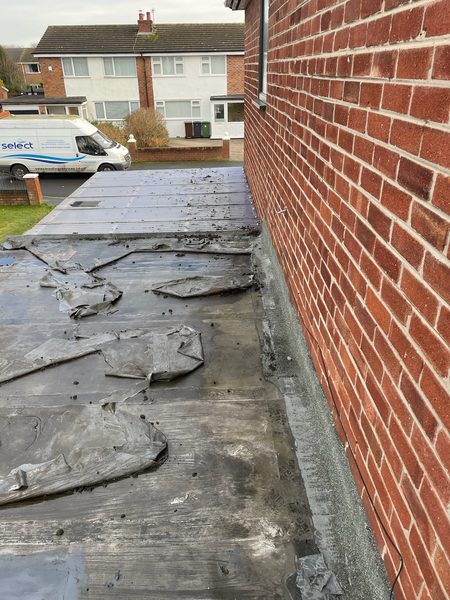
Flat roofs rarely fail all at once — they show warning signs for months or years before a genuine leak develops. The trouble is that most of these signs are easy to miss from ground level. Here’s what to actually look for.
1. Widespread ponding
A small amount of water sitting briefly after rain is normal. But if water is still visibly pooling more than 48 hours after rain, especially across multiple areas, that’s a sign the roof has lost its intended fall or developed low spots as the covering has aged.
2. Surface crazing (older felt roofs)
Fine, web-like cracking across the surface indicates the covering has lost flexibility, usually from prolonged UV exposure. This is most common on older felt coverings — widespread crazing is a strong indicator the covering is nearing the end of its serviceable life.
3. Granule loss
Felt roofs have a mineral granule surface that protects the bitumen beneath from UV degradation. As this wears away, the surface takes on a lighter, patchy, or bald appearance.
4. Blistering
Raised, bubble-like areas form where moisture or trapped gas gets sandwiched within the covering. A blister that hasn’t split yet may not be actively leaking, but it represents a weak point.
5. Visible splits or tears
Once a blister or crazed area progresses to an actual split, you have a direct path for water ingress — this needs addressing rather than monitoring.
6. Persistent interior staining or musty smell
If you’re seeing ceiling staining or noticing a musty smell in the room beneath a flat roof, moisture is getting in — either through a failing covering or condensation. See our guide on flat roof condensation and damp to distinguish which.
7. Age approaching or beyond typical lifespan
| Covering | Typical lifespan |
|---|---|
| GRP | 20–30 years |
| EPDM | 25–40 years |
| Felt | 15–20 years |
One isolated sign is often still in repair territory. Multiple signs together, especially combined with age, generally point toward replacement being the more sensible long-term decision.
Not sure what your roof needs?
We offer free inspections across Merseyside. We go up, take photos, show you what we find and give you an honest recommendation. No pressure, no obligation.